Showing posts with label SCIENTIFIC HOMEOPATHY. Show all posts

Thursday, January 28, 2010

Homeopathic Silica - The Gardener's Friend

Courtesy :  www.Homeopathyplus.com  & www. Homeopathyheals.me.uk

Which homeopathic remedy has the power to:

  • Strengthen weak and spindly plants
  • Turn deserts into fertile fields,
  • Kill weeds
  • Convert water repelling soils into moisture loving ones
  • and more?
    Silicea!

    No other remedy does so much, at so little cost, for so many plant and soil problems. Silica, known within homeopathy by its Latin name of Silicea, should have pride of place in everyone’s garden shed because once tried, no farmer or gardener wants to be without it. Let’s find out why.

    How it Began.

    Homoeopathic silica has long been used for human and animal health problems but knowledge of its ability to treat plant and soil sickness is relatively new. In people (and animals) it is used for: lack of confidence, dry skin, weakness, fatigue, delayed development, slow healing of wounds, infections and abscesses, and failure to thrive. When homoeopaths realised these symptoms seemed to also occur closer to the ground in plant form, they began to wonder if Silicea could have a wider use. It was not long before its important role in horticultural and agricultural problems when used for Silicea-like symtoms was discovered.

    Silicea for Strong and Healthy Plants.

    Without the presence of naturally occurring silica in the soil, plants would be unable to stand upright or even grow. It acts on every cell and tissue, giving strength and ‘grit’. It regulates all cellular processes, including reproduction, and brings a healthy resilience to brittle growth. When silica is missing from the soil, or when plants have trouble using it, homoeopathic silica makes a world of difference - puny plants with weak and straggly growth, or those prone to fungal attacks, grow strong and vigorous within days of being sprayed.

    Silicea as a Soil Tonic

    Silica is difficult to add to soil as either a nutrient or supplement, and in truth it is rarely missing from it - but when it is, a spraying of homoeopathic silica improves plant health, helping them to absorb the little that is there. On top of this, homeopathic silica changes the ionisation of soil particles so they are capable of absorbing  and retaining moisture (more on this later).

    Silicea Prevents Transplant and Other Shocks

    Plants that are in shock will stop growing, wilt in the sun, drop their leaves, and be at risk of dying. Shock mainly happens with transplantation but also occurs from things such as damage to the root ball or extreme changes in temperature. A single spray of Silicea, before or after transplant, will strengthen the plant, relieve stress and prevent exhaustion.

    Silicea Strengthens Plants against Pests and Diseases

    Homoeopathic silica helps plants protect themselves against fungi, moulds, mildews, root sliminess, and some forms of rust. It also strengthens plants against pests such as aphids, budworm, citrus mite and dried fruit beetle. But be careful - one spray is all that's needed.

    In his book, Homeopathy for Farm and Garden, Kaviraj recounts one instance of a sapling being affected by dieback. It only had one quarter of its bark left and even that was loose and drying out. Within a day of being given a dose of Silicea the bark was reattaching itself to the cambium (the layer of cells lying between the wood and bark from which new bark and wood cells are produced), and after one week the top branches were growing new shoots and leaves. With dieback being such a problem in many countries of the world, a method of preventing or treating this disease is welcome news indeed.

    Silicea Stimulates Seed Germination.

    A single dose of Silicea is usually sufficient to help germinate the seeds of perennials and biannuals so they lead healthy lives right from the moment they are sown. Just soak the seeds before planting in some water to which some Silicea has been added. The seeds will subsequently sprout strong roots and firm shoots. They will also be resistant to damping off and less prone to insect attack.

    Silicea Produces Beautiful and Prolific Flowers.

    One spray of Silicea as flower buds are forming has been shown to increase the size and number of flowers produced.

    Silicea Eradicates Weeds.

    Annual weed problems can be safely cleared once and for all with Silicea. As weeds produce their juvenile flower heads, spray them once then again, 10 days later. The heads will flower prematurely without setting any of the seeds that would normally produce next year's crop of weeds. Farmers (or home gardeners) can also take advantage of the positive effects Silicea has on seed germination by sowing their own seeds with the final spraying.

    Silicea Sets Fruit and Stops Fruit Fall.

    If sprayed at the beginning of flowering, Silicea will help trees or plants set their fruit and prevent them from dropping it during early development. Only spray once, though, or the reverse can happen – just like the weeds the tree will fail to produce a harvest.

    Silicea Makes Water-repelling Soil Absorbent.

    Some soils just hate water. Potting mixes, sandy soils, dusty soils, and soils high in organic matter are the worst in this regard. They absorb water so poorly that it simply rolls off the top of them, leaving the plant dry and thirsty. Silicea changes that. Once watered or sprayed onto the soil, the ionisation of the soil particles changes. As if by magic, they start to attract and bind water, creating highly absorbent and moist soil.

    Note: Silicea will not improve absorption when compacted soil is the problem. In this instance you still have to get out your spade and do a bit of digging break up the ground.  

    Silicea Greens a Desert.

    One of the most exciting things about Silicea is its capacity to green desert-like areas in a remarkably short space of time. One treatment, watered in, produces desert sand capabale of holding large amounts of water for long periods – up to 6 weeks even in the absence of rain. The subsequent addition of mulch and good organic matter will then further improve the soil.

    Kaviraj speaks of an early experience during the 1990s when he was in Western Australia. On one farm north of Perth he and a small group of men began a tree planting project. The land was arid and almost completely sand. First, they sprayed the ground with homeopathic silica and then left it to rest for 6 or so weeks. On their return to plant several hundred saplings, they found the soil was so moist that wet sand clung to their spades as they pulled them from the ground. On their next visit, 6 weeks later, they were met by an army of thriving young saplings that were larger, stronger, and more vigorous than could have been expected for the soil in which they were planted  – and all from a single spray of Silicea. To Kaviraj’s knowledge, that once arid piece of land remains green to this day.

    While not exactly desert areas, Kaviraj says that similar results can be achieved with bowling greens and similar courses - patches of bare ground and ‘fairy spot ring’ will be rapidly replaced by thick healthy turf if given a dose of Silicea.

    He concludes with the following statement, “This greening of the desert can add tremendously to our surface of arable land and thus increase the CO2 uptake by another 30 to 40%. It will also help in alleviating world hunger and provide enough food for all the world's inhabitants - provided of course we divide the benefits equally.”

    Caution!

    Sometimes there can be too much of a good. Farmers and gardeners who practice agrohomeopathy will be quick to tell you that repeated and unnecessary doses of Silicea can be counter-productive. For example, when a healthy tree is repeatedly sprayed with Silicea, its bark can be crippled - the balance has been tipped too far and the remedy is starting to produce in the tree the very symptoms it can treat. (This phenomenon is explained in tutorials 1, 6, 15, and 16 where the Law of Similars, provings and remedy responses are discussed).

    The same is true for fruit and seed setting. If plants are sprayed more than once at the time of flowering, fruit and seed production will be halted rather than helped. While this may be an advantage for weed eradication, it is obviously not desirable for growing fruit.

    And finally, while Silicea can also green a desert, it will just as quickly create one if it is over-used. One dose is all that is needed to start the greening process – more will be too much. Remember, homeopathy always works best when only as little as needed is used rather than as much as possible.

    How is Silicea Used?

    For general garden use, add one pill of Silicea 6C to a spray bottle of 200 ml of water, shake vigorously, and then spray or water onto your plant or soil until wet. Easy! For farm use, proportionally increase the volume of water and number of pills. Remember, unless trying to eradicate weeds, one spraying will be sufficient

    To stimulate healthy germination of seeds just dissolve one pill in a bowl of 200 ml of water and soak the seeds for approximately 20 minutes; then plant as normal.

    Bringing it all Together.

    In short, one single application of homeopathic silica has been shown to have profound effects of long duration on soil productivity and every stage of a plant’s life. It is able to:

    • Antidote manganese toxicity in soils
    • Change the ionisation of soil particles in water-repelling soils so water is easily absorbed
    • Stimulate seed germination of grasses, plants and trees
    • Help plants survive and even thrive in low rainfall or desert areas
    • Strengthen weak and struggling plants
    • Produce trees with hard and dense timber that is more resistant to termite attack
    • Prevent and treat dieback
    • Increase plant resistance to disease and pests
    • Produce larger and more prolific fruits and flowers
    • Replace brittle stems and leaves with those that are resilient and supple
    • Stimulate healing and recovery from tree cancer, galls, injuries, and ulcerating wounds caused by pruning, storms or mechanical damage.
    • Aid recovery from transplant shock and stress

    Silicea achieves these remarkable things with plants and soil exactly the same way it does with humans and animals. All that is needed is for Silicea-like symptoms to be present. The remedy then strengthens the underlying health of the troubled plant so it is in a position to effectively deal with its own problems - just as nature intended. The only requirement for success is to check that the plant's sickness matches those of Silicea symptoms and arises from a general 'failure to thrive' state. This is then homeopathy.

    So, if you have plants with any of the above problems, and if the cause seems to be a lack of stamina, resilience, or ‘grit’, why not give them a dose of homeopathic silica? The results can be amazing.

    Resource

    Vaikunthanath, D. K. (2006). Homeopathy for Farm and Garden: Toward a Homeopathic Agriculture. Mark Moodie Publications: United Kingdom. (This book is available from the Homeopathy Plus shop)

    Sunday, March 01, 2009

    Research Supporting Homeopathy

    Source: http://www.healthnews.com/blogs/melanie-grimes/natural-health/alternative-medicine/research-supporting-homeopathy-2596.html


    The first double-blind crossover study ever performed was conducted by homeopaths in 1906. This study was run concurrently in eleven different cities on fifteen subjects. The documentation of this experiment consisted of 665 pages, published as Research Provings of Belladonna. Also at the turn of the nineteenth century, a book on homeopathic research was published called The Logic of Figures or Comparative Results of Homeopathic and Other Treatments. This book provided dozens of charts comparing disease and death rates in homeopathic and allopathic (mainstream) hospitals. This research also investigated statistics on the epidemic diseases of scarlet fever, yellow fever, and typhoid. The research showed that homeopathic hospitals had an average of 50 to 80 percent fewer deaths per 100 people, depending on the disease compared.
    During World War II, an early double-blind study of homeopathy was sponsored by the British government. The experiment demonstrated that those given homeopathic remedies experienced a significant improvement in burns from mustard gas compared to those given placebo.
    Many modern clinical trials are currently underway, looking for evidence of the efficacy of homeopathy from controlled trials in human subjects. More than 100 clinical trials have been conducted, some published in highly prestigious journals such as Lancet and JAMA. In 1997, K. Linde and W. Jonas, directors of the Alternative Medicine Evaluation Department of the National Institute of Health, co-signed a meta-analysis which evaluated 186 clinical trials on homeopathic therapies. Among the 105 trials whose results could be interpreted, 81 presented positive results, while homeopathy did not have a positive effect in 24 others. The authors concluded that, "the results of this meta-analysis are incompatible with the hypothesis that the clinical effects of homeopathy are due exclusively to a placebo effect."
    Proliferation of interest in the area of clinical research abounds. In April 2003, a two-day conference was held in London on the topic of clinical research. Dick Koster  reports: "Those who are opposed to homeopathy…base their conclusion on the last negative study…. Followers of homeopathy herald all positive news and complain about serious design flaws in negative studies…. Both sides claim their successes and failures as definitive while in reality, new research…would only add or subtract a small effect to or from the already existing evidence…of homeopathy being true." This being said, Koster goes on to say that "homeopaths look at their patient results and believe that no amount of negative research could topple their belief in homeopathy."
    A recent double-blind study has shown the antiviral effect of homeopathic remedies. Eight of the ten remedies tested inhibited viruses in chicken embryos from 50 to 100 percent depending on the potencies used. German scientists at a Veterinary College showed use of the homeopathic remedy Chelidonium lowered serum cholesterol when given twice a day to rabbits on a cholesterol rich diet.
    The British Journal of Clinical Pharmacology published a double-blind experiment on patients with rheumatoid arthritis. Of those given a homeopathic medicine, 82 percent experienced some relief of symptoms, while only 21 percent of those given a placebo experienced any similar degree of improvement.
    Research has also been conducted in the use of homeopathy in cancer. In 77 mice that received a transplant in fibrosarcoma, 52 percent survived more than a year when treated with homeopathic remedies. The 77 untreated mice died within 10-15 days.
    Many critics of homeopathic research site flaws in the designs of the studies, weakness in reporting and measuring techniques, small numbers of study participants, and the difficulties in replicating results. Homeopathy works and the proof is in the pudding. Because the science is based on one remedy for one person, it is difficult to construct studies and judge the results. Clinical results have noted homeopathic cures taking place around the globe for over 100 years. The miniscule doses are still immeasurable by today’s science, but in the future, equipment will be designed that can adequately measure the healing effects of homeopathy.

    Friday, December 19, 2008

    The facts about an ingenious homeopathic experiment that was not completed due to the “tricks” of Mr. James Randi.

    The facts about an ingenious homeopathic experiment that was not completed due to the “tricks” of Mr. James Randi.

    Courtesy : Dr vithoulkas

    In 2002 the BBC Horizon program presented a documentary that showed that the Benveniste experiment about homeopathy was a fake one and therefore... homeopathy was also fake! http://news.bbc.co.uk/2/hi/health/2512105.stm

    Does homeopathy work?

     James Randi

    James Randi believes homeopathy is a delusion

    The American illusionist James Randi offered a million dollars to anyone able to prove that homeopathic remedies can really cure people. The producer of the BBC's Horizon programme explains why he took up the challenge.

    Mr.Vithoulkas had repeatedly stressed in many communications that the experiment was in any case a falsely conceived one from its very beginning (see the correspondence). The opponents of homeopathy basing in this false experiment by Benveniste their hypocritical arguments maintained that homeopathy was simply placebo effect.

    Mr Randi after this false experiment (ignoring all other experiments that showed the effect of homeopathy) declared in his website (http://www.randi.org/) that whoever could prove the validity of the action of a homeopathically potentized remedy beyond the Avogadro number would be winning one million $ as a prize.

    Mr Vithoulkas challenged this statement and with this idea a new experiment was conceived that would prove that the highly potentized remedies could actually have a biological effect upon the human organism.

    The experiment was simple: An individualized remedy would be given to a number of patients in a double blind fashion and half of the patients would receive placebo the other half would get the real remedy. The Greek Homeopathic physicians that would participate in taking of the cases and prescribing the remedies should point out in the end of the experiment the ones that they had got the real remedy.

    The protocol was structured by a group of internationally known scientists and the experiment had to take place in one of the hospitals in Athens.

    What follows is the real story (with facts in correspondence that transpired) of how through several "tricks", Mr.Randi refused to go through the experiment and rescued his million.

    We sent the following statement to Mr. Randi in order to be posted to his website but he refused to post it.

    RETRACTION STATEMENT

    11.11.2008

    INTRODUCTION: This is a retraction statement against the erroneous piece of information published on JREF (James Randi Educational Foundation) website http://www.randi.org/ , concerning the supposedly "withdrawal of Homeopaths" from a experiment (agreed upon between JREF and the Greek homeopathic team of medical doctors) that was devised in order to prove that there is a biological effect on human organism from the ultra high dilutions of homeopathic remedies, beyond the Avogadro number.

    BRIEF HISTORY OF THE EVENTS:

    - The group of homeopaths led by Prof. George Vithoulkas contracted an agreement with JREF on 2003, with the objective of matching a ``challenge'' posed by JREF, in order to carry out a scientific experiment that proves that the human organism responds to homeopathic ultra dilutions, and claim the 1 million USD challenge prize offered by JREF.

    - On 2003, a team of ``skeptics'' was set up, to represent the JREF side in the scientific experiment that would follow. The group of skeptics and the group of homeopaths led by Prof. George Vithoulkas have been conducting preparatory work continuously since then.

    - A protocol was drawn up with the title: “Do homeopathic remedies have a recognizable biological effect on the human organism?”

    - The venue for the experiment was to be a Greek hospital. Eventually, after several contacts with several hospitals, the municipality hospital "ELPIS" in Athens, Greece had agreed to host the experiment. The pharmacist that would provide the homeopathic remedies for the experiment -Mr. Korres Pharmacy-, was also found and the agreement was finalized on 12.10.2005. At that time Ms. Althea Katz, representative of Mr. Alec Gindis (he was one of the representatives of Mr. Randi) visited the Greek municipality hospital in Athens and discussed all the details about the experiment exhaustively.

    - In 26.10.2005, Mr. Alec Gindis informed Prof. Vithoulkas by e-mail that the finances for the experiment were not yet raised and therefore the experiment could not start in spite of the fact that everything else was ready.

    - In 17.8.2006, we received a signed agreement from Mr. Randi in which he stated that he was satisfied with the suggested protocol and he waived the claim of a preliminary test.

    - As we waited for the finances to be raised, in order to start with the experiment, in 2.2.2006, we were informed that Mr. Randi had a health problem. When Mr. Gindis asked him to assign a representative in order to deal with all the procedures for the starting of the experiment, Mr. Randi refused to do so. As a result of his refusal the experiment was delayed so much until a new Mayor was elected in Athens who replaced the authorities of the ELPIS hospital, something that we had anticipated and repeatedly stressed to the “sceptics” long ago. The new Mayor Dr. Kaklamanis, a conventional medical doctor was indifferent if not hostile to the project. We had repeatedly warned the “sceptics” that if the experiment did not start the latest in the beginning of 2006, the new Mayor will change the key persons in the hospital -the president of the hospital and also the chairman of the scientific committee- and the new people most probably would not respect the decision of the previous scientific committee.

    At this crucial time in the beginning of 2006 that the experiment had to start, Mr. Randi declared that he was sick and that his rehabilitation was ...going to last from the beginning of February till July! But this was the crucial period that the experiment should have started in order not to be affected by the new authorities of the hospital.

    It is characteristic of the urgency from the exchange of e-mails and more especially the e-mail Mr. Gindis wrote to Mr. Randi: “I want to underline, though, that your participation is critical… As you can imagine, the homeopaths are very concerned about your health. In their eyes you “failed” them by getting sick right when they just about put it all together”.

    In 7.4.2006 Mr. Gindis wrote to Mr. Randi in order to signal to him that the homeopathic team was ready to start: “All in all, I am impressed that he (Prof. Vithoulkas) managed to put together such a team, find a sponsoring hospital and find a way to recruit patients with advertising efforts and costs carried by the hospital and participating homeopaths”. But instead Randi suspended all activities of the experiment attributing it to his supposedly state of health!

    Mr. Randi knew very well that this period was crucial for us to start the experiment and we had made this urgency explicit by sending several e-mails urging them that it was necessary to go ahead immediately. But Mr. Randi needed ...six months "to recover" denying to assign a collaborator. As expected, in Autumn of 2006 a new Mayor Dr. Kaklamanis M.D. was elected in Athens.

    For us, all this extended period of recovery was obviously an excuse for not starting the experiment.

    After the election of the new Mayor, a new chairman for the scientific committee and a new president of the hospital were installed.

    Immediately we started pressing them to respect the decision of the previous scientific committee or to decide -in a new meeting- in favour of the experiment.

    The interesting thing was that on 16.5.2008, Mr. Randi -thinking most probably that we could never succeed in getting a second permission- suddenly became very gallant and wrote: “In any case, it may not be necessary for me to actually be present in person for these tests. I am prepared to assign security and protocol duties to Alec Gindis and to Mr. Gabor, so they can act in my behalf”. But in the mean time and as early as March 2008 was already putting up in his website a text claiming that the "Greek homeopaths have withdrawn from the experiment ...as expected"!!

    The important question is: why Mr. Randi delayed the starting of the experiment by the moment everything was in place in 2006, claiming that he...would be recovering for six months and that nobody else could replace him, while the next time, when he thought that we could never succeed in obtaining a second permission from the ELPIS hospital, he became so gallant as to assign a collaborator?!!

    He was so sure that we will not succeed in getting a second permission from the hospital that in 16.5.2008 Mr. Randi sent us a... notarized statement saying:

    I intend to go through with the proposed test of the claims of homeopathy, as previously discussed in exchanges between George Vithoulkas and myself. This stance has not changed, and it will not change”. !!! See his new statement later on (17.10.2008) when he knew already that we had the permission!!

    - In the end of July of 2008, after a lot of efforts, we obtained for a second time the permission to conduct the proposed homeopathic experiment at the ELPIS hospital.

    - On 2nd and 3rd September of 2008, there was a final meeting in the International Academy of Classical homeopathy in Alonissos to discuss last details of the experiment. In the meeting were present the representative of Randi, Mr. Hrasko Gabor, Ms Althea Katz (representative of Mr. Alec Gindis), Dr. Menachem Oberbaum, principal investigator of the experiment and Prof. George Vithoulkas. They discussed for two days all the details about the experiment and the discussion was taped officially and also some of it videoed by a professional camera man from Israel.

    - A FEW DAYS LATER (during September 2008) WE RECEIVED INFORMATION FROM USA THAT IN RANDI’S WEBSITE WAS APPEARING (since March 2008) A TEXT (under a title ANOTHER WITHDRAWAL) SAYING IN EFFECT THAT THE GREEK HOMEOPATHS HAVE WITHDRAWN FROM THE EXPERIMENT!!

    In the document was stated that a major test of homeopathy in Greece has met the expected fate, being abandoned by the homeopathy community!!!!

    This information infuriated the group of homeopaths led by Prof. George Vithoulkas and a lot of damage was caused to him as was accused for been associated with such unreliable people.

    But the most outrageous event happened on 17.10.2008, when we actually received an "ultimatum" from Mr. Randi by which he was changing all the previous agreements refusing to go ahead with the experiment as planned.

    Here is what he wrote:

    “…Forget all previous correspondence exchanged on the subject. …What appears here is the current status. …First, we require that George Vithoulkas submit a regular, properly-filled-out application and submit it –just as we require everyone to do. After that has been received, we’ll go ahead– as with any regular applicant- with the arrangements, including the requirement for the preliminary stage”.

    Here you can see his whole statement with some remarks from us in red:

    To All Concerned:

    The brouhaha that began as a comprehensive homeopathy test In Greece, has been consuming far too much of my time and attention, and of my colleagues, as well. Forget all previous correspondence exchanged on the subject. What appears HERE is the current status. Mr. Randi asked from us to forget all previous correspondence after we discovered the false, slanderous and deceptive posting at his website JREF with the title: “Another Withdrawal”.

    We’re starting anew. Bear in mind that WE are offering the million-dollar prize, and WE will control the parameters, in line with the rules of the challenge – which are available to everyone. There will be no more exceptions, which I had – unwisely – granted to certain persons in order to be more accommodating; they have always chosen to be difficult, capricious, and arrogant as a result of this courtesy. No more.

    First, we require that George Vithoulkas submit a regular, properly-filled-out application, and submit it – just as we require EVERYONE to do. After that has been received, we’ll go ahead – as with any regular applicant – with the arrangements, including the requirement for the preliminary stage. Mr. Randi changed the terms of agreement when he saw that everything was ready for starting the experiment. While his representatives were discussing with Prof. George Vithoulkas in Alonissos (September 2008), he was publicizing to his website that the Greek homeopaths had withdrawn!!! Since I’m not personally handling the challenge applications, I’m not aware of how many places George Vithoulkas has tried for a venue, but I know that his own country turned him down, as well as some others. Second, we’ll require that Mr. Vithoulkas obtain a venue and all the necessary facilities for conducting a double-blind, correct, acceptable protocol, before we will go ahead – following the receipt of the application.

    Mr. Randi pretends that he ignores the fact that we had already the permission and the facilities for a second time though we had informed the “skeptics”.

    The protocol used by the Royal Society/BBC tests in the UK – based on Jacques Benveniste’s design, and carefully supervised by the homeopathic community there – would be acceptable for this set of tests.

    Mr. Randi wants to change even the terms of protocol that took years to be contracted!!

    Don’t contact me personally on this matter. I’ll not entertain any arguments or pleas. It will be handled by Alison Smith, working with others on our staff.

    Actually Mr. Randi is dismissing his previous collaborators, Mr. Alec Gindis and Mr. Hrasko Gabor!!!

    These 300 words constitute my entire commentary on the matter.

    James Randi.

    It was clear now for a second time that when everything was in place in order to start the experiment, Mr. Randi didn’t wish to go ahead and found ridiculous excuses for withdrawing.

    Consequently, as a least compensation, for the moral damage caused to Greek homeopaths and to the homeopathic community in general, we demand:

    1. The apologies from Mr. Randi personally posted at his website.

    2. The retraction of the text “Another Withdrawal” from all sites.

    3. This document to be posted in the same place in the website of JREF where the "withdrawal statement" was posted.

    4. A legal, notarized statement retracting the last statement of 17.10.2008 that has cancelled all Mr. Randi’s previous commitments.

    If Mr. Randi fulfils all these conditions we will continue as planned. If these conditions are not fulfilled within a month, we will consider that Mr. Randi has withdrawn from the experiment. In any case, we will go ahead and complete the experiment without Mr. Randi, only with the help of sceptics Mr. Alec Gindis and Mr Hrasko Gabor who really care in seen this experiment finally completed.

    Wednesday, December 10, 2008

    OpenRep-free open source homeopathic software

     screenshot_OpenRep

    OpenRep -free open source homeopathic software :

    courtesy : Vladimir Polony

    OpenRep is the first truly free Open Source homeopathic software, developed by Vladimir Polony with only one goal - to provide functional and portable homeopathic software that could contribute to the whole homeopathic community. The whole design is driven by the functionality and ease of use, always offering the least complicated way of repertorizing and evaluating a homeopathic case. OpenRep is the first homeopathic software developed in Java, making it the most portable homeopathic software that can be run under a wide variety of operating systems.

    The source code of OpenRep FREE is freely available for download making in the world's first and only Open Source homeopathic software.

    List of Repertories included  :

    Open source repertory model
    All the repertories used in OpenRep are open source, which means, that their source code is freely available and can be used in other softwares, publications, etc. provided, that the name of the author of the repertory and the repertory name is always visibly declared. The description of the repertory model of the repertories is available here.

    Repertorium Publicum
    The first open source repertory. It is based on the latest edition of Kent's Homeopathic repertory and has undergone a lot of changes. For more information on the project, please see the Repertorium Publicum project page.

    Short Repertory of Bach Flower Remedies by Vladimir Polony
    This repertory was donated by its author Vladimir Polony and is declared to be open source. This means that it is open to any changes and modifications. See also BachFlowerOnline.com

    Boenninghausen's Repertory by Timothy Field Allen
    This is the original Boenninghausen's repertory composed by Baron Clemens Maria Franz von Boenninghausen and translated by T.F. Allen in 1891, although it is not as complete as Boenninghausen's Repertory from C.M. Boger, it certainly does not lack the originality of approach. In this repertory we can clearly see the original Boenninghausen's approach of dividing symptoms into their components according to Locality, Condition, Modality and Concomitants and repertorizing by putting these symptoms together based on patients symptomatology.

    Sensations as if by Herbert Roberts
    This is a truly unique repertory containing rare symptoms expressed as Sensations as if. It contains unique symptoms not listed even in the most modern repertories. This repertory is a must for a thorough prescriber.

    Homeopathic Repertory by James Tyler Kent
    This is a the classic among all the repertories. All the modern repertories have taken to some extent this repertory as their basis. It is the biggest and most complete of the older repertories.

    Boenninghausen's Repertory by Cyrus Maxwell Boger
    A truly unique repertory that uses the characteristic approach of Boenninghausen. Although this repertory does not contain modern addition, from the point of view of completeness of remedies available in the repertory, it is considered the most complete and homogeneous repertory. The version you can find in OpenRep is the version from 1937 including Dunham's notes.

    General Analysis by Cyrus Maxwell Boger
    Although small in size, this repertory is considered to be a life-saver when encountering difficult cases. It consists of a small number of very general symptoms with a lot of cross-references that allow to perform a general analysis of a case based on general symptoms and conditions.

    Download Links :

    List of available versions

    OpenRep FREE 1.6 (2008-11-30) MS Windows
    download

    OpenRep FREE 1.6 (2008-11-30) all operating systems
    download

    Saturday, August 09, 2008

    Knowledge and Attitudes about HIV/AIDS among Homoeopathic Practitioners and Educators in India

    courtesy : Indian Journal of Research in Homoeopathy Vol. 1, No. 1, 2007

    Download : PDF (421.4 KB)

    Adeline Nyamathi1, Vijay Pal Singh2, Ann Lowe1, Anil Khurana2, Divya Taneja2,
    Sheba George3 and John L. Fahey4 1School of Nursing, University of California, Los Angeles, California, USA, 2Central Council for Research inHomoeopathy,  Delhi, India
    3Research Centers in Minority Institutions, Charles R. Drew University of Medicine
    and Science and 4UCLA David Geffen School of Medicine, Los Angeles, California

    This study is designed to assess AIDS knowledge among Homeopathy educators and
    physicians in India, which has not been evaluated previously. India now has the largest number of HIV infected persons worldwide, with an estimated cumulative 5.1 million infections. Homeopathy is the dominant system among the nationally-recognized alternative or complementary systems of medicine, which collectively
    provide health care to around 600 million people in India. Homeopathy,with its holistic and patient-centered approach, has a wide reach to people at risk of contracting human immuno deficiency virus (HIV). Participants were 68 homeopathy physicians (34 educators and 34 practitioners) who completed a CDC questionnaire
    measuring HIV/AIDS Knowledge regarding AIDS. This study reports the current level of knowledge of, and attitudes about, HIV/AIDS among homeopathy educators and practitioners. These findings will assist in the development of an education module to equip homeopathic health care personnel to impart accurate AIDS information
    and prevention counseling to their patients in an efficient manner.
    KEYWORDS : Education – HIV/AIDS – Homeopathy – India

    Friday, August 08, 2008

    Global researches in homeopathy for Maternal & Child Care

    Read this document on Scribd: global researches in homeopathy for Maternal

    This paper was presented by Dr Hari Singh , Research Officer (CCRH)in a recently concluded State Workshop on "State Campaign on Homoeopathy for Mother & Child Care " in Lucknow on 17-18th March 2008. This paper is the compilation of homeopathic clinical trials conducted by various individuals & institutions globally.

    Download : PDF

    Friday, July 11, 2008

    A Multicentric Open Clinical Trial to evolve a group of Efficacious Homeopathic Medicines in " Benign Prostatic Hyperplasia (BPH)


    Source : CCRH News Letter
    Download : Text
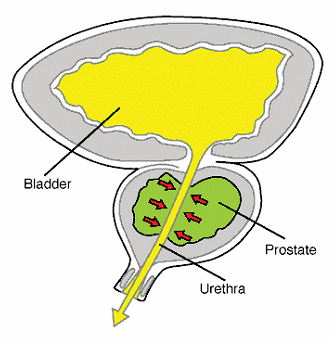
    The prostate is a muscular, walnut-sized gland that surrounds part of the urethra, the tube that transports urine and sperm out of the body. A part of the male reproductive system, the prostate secretes seminal fluid, a milky substance that combines with sperm produced in the testicles to form semen. During sexual climax, muscles in the prostate propel this mixture through the urethra and out through the penis.
    Anatomy and Physiology
    The prostate is located directly beneath the bladder and in front of the rectum. Because the upper portion of the urethra passes through the prostate, if the gland becomes enlarged it can obstruct the passage of fluid through the urethra. While this is uncomfortable, it generally does not impair a man's ability to function sexually; however, the discomfort nd embarrassment it causes can interfere with sexual activity.
    Diseases of the Prostate
    Benign diseases are noncancerous. They can be uncomfortable and inconvenient but are not life-threatening, and often can be treated with drugs or surgery. The two main benign diseases of the prostate are prostatitis and Benign Prostatic Hyperplasia (BPH). The main malignant (cancerous) disease of the prostate is adenocarcinoma of the prostate, or prostate cancer.
    Role of Homeopathy
    In homeopathy literature various medicines are given for the treatment of prostatic enlargement but no significant work has being done to elicit their efficacy. As such there is need to explore the efficacy of homeopathic medicines otherwise indicated for various diagnostic symptoms of Benign prostatic hyperplasia in the homeopathic literature.
    Central Council Of Homeopathy, India has undertaken this project in its  Lucknow, Gudiwada, Bhopal, Noida, triputh & siliguri centres .
    Click HERE to download the study report.
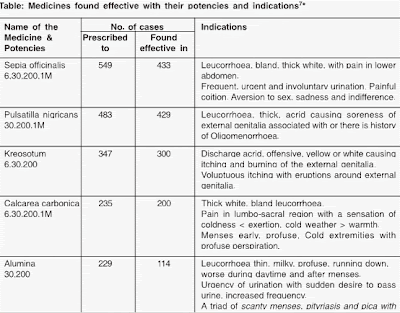
    Click on the image to view the enlarged & clear picture.


    Sunday, July 06, 2008

    Clinical evaluation of Homoeopathic medicines in chronic cervicitis and cervical erosion- A study report

    Clinical evaluation of homoeopathic medicines in chronic cervicitis and cervical erosion

    S R Sharma, Bindu Sharma , Clinical Research Unit, Shimla.

    C Venkataranam, K.S.V Bharat Lakhshmi R V R Prasad, Clinical Research Unit, Tirupati.

    Hari Singh, Asha Hari Singh, Praveen Oberai,Sangeeta Duggal, Savita Kattara, Regional Research Institute, New Delhi.

    B. K. Singh, Ojit Singh, Clinical Research Unit, Imphal.

    S D Pathak, M K Rai, Clinical Research Unit, Varanasi (U.P.).

    Source : CCRH News letter 2007

    Download : Full Text

    Objectives: The objectives of the study were to evolve a group of most effective homoeopathic medicines in chronic cervicitis and cervical erosion and to identify their reliable indications, useful potencies, frequency of administration and relationship with other medicines.

    Methods: The study was undertaken by Central Council for Research in Homoeopathy at its Units/Institute at Shimla, Imphal, Varanasi, Tirupathi and New Delhi. Cases of Cervicitis and Cervical erosion, presenting with vaginal discharge, low backache, lower abdominal pain/discomfort or dyspaerunia confirmed by P/V & P/S examination were enrolled in the study. Cases suffering from other chronic disease(s) or under other system of treatment were excluded from the study. Homoeopathic medicines were prescribed on the basis of totality of symptoms of each case, in mother tincture (Q) or 6C, 30C, 200C & 1M potency. A total of 3213 cases were followed up for one year. Assessment of improvement was done on predefined parameters.

    Results: There was varying degrees of improvement; 261 cases were cured, 1104 cases improved markedly, 982 cases moderately, 713 cases mildly and 153 cases did not improve. Medicines found effective were: Alumina(n=114), Borax(n=67), Calcarea carbonicum(n=200), Caulophyllum(n=170), Hydrastis(n=110), Kreosotum(n=300), Lachesis(n=160), Mercurius solubilis (n=74), Natrum muriaticum(n=97), Pulsatilla(n=429) and Sepia(n=433). A few of the cases, who required repeated cauterization in the past, got cured permanently and required no cauterization after homoeopathic treatment.

    Conclusion: Sepia alone emerged as the most frequently indicated medicine for Cervicitis and Cervical erosion. The objective to identify indications of homoeopathic medicines was achieved. But, other objectives, such as relationship between different medicines, could not be achieved.

    Monday, June 30, 2008

    Clinical Trial of Homoeopathic Preparations of Amyleum Nitrosum, Azathioprine, Cocainum Muriaticum and Cyclosporine in HIV Disease- a study report

    This Clinical  study was undertaken under guidance of Dr. V.P. Singh ,Central Council for Research in Homoeopathy , New Delhi at the RRI, Mumbai (May, 1989) and CRU, Chennai (October, 1991)  by CCRH to ascertain whether homoeopathy can play a role in the treatment and management of HIV infection . The results obtained during the pilot study prompted a randomized placebo controlled study at Mumbai (1995-97). The results of the study were published in the British Homeopathic Journal (1999).

    In  between April 1998 and March 2003  , 237 HIV infected individuals including, 96 Females and 8 children less than 10 years of age were enrolled in the study .Three of these individuals were suffering from concurrent Hepatitis B infection and 2 were reactive to VDRL . Amyleum Nitrosum, Azathioprine, Cocainum Muriaticum and Cyclosporine were primarily used as medicines under trial . Other Homoeopathic medicines were used only during seasonal minor ailments based on presenting signs and symptoms.

    Assessment of Outcome :

    • The response to the treatment was assessed at the end of the study and was based on the change in clinical presentation
    • The response to treatment was also assessed by the haematological and immunological  investigations such as CD4/CD8 counts
    • Most of these investigations were conducted at the Council’s HIV Research Lab.

    Download the report  in power point presentation .

    Friday, June 27, 2008

    Scientific Research in Homeopathy

    Links To New Articles :

    Please click on the provided links to access the full text of the following articles:

    Wednesday, June 11, 2008

    Effects of homeopathy in mice experimentally infected with Trypanosoma cruzi.

    Source : Pubmed

    Effects of homeopathy in mice experimentally infected with Trypanosoma cruzi

    de Almeida LR, Campos MC, Herrera HM, Bonamin LV, da Fonseca AH.

    Department of Animal Parasitology, Universidade Federal Rural do Rio de Janeiro, RJ, Brazil. rodrigues_lu@yahoo.fr

    AIM: The aim of this study was to evaluate the action of homeopathic treatment on mice experimentally infected with Trypanosoma cruzi. METHODS: Eighty adult male C57BL/6 inbred mice were randomly allocated to five groups treated with biotherapy (nosode) of T. cruzi 12dH (12x) pre- and post-infection; Phosphorus 12dH post-infection; infected control treated with control solution and uninfected control. The biotherapy was prepared by the Costa method from the blood of mice experimentally infected with the Y strain of T. cruzi. Phosphorus was used because of its clinical and reportorial similarity to Chagas disease. T. cruzi (10(4)) sanguineous forms were inoculated intraperitoneally per animal. Parasitaemia was monitored, leukocyte and serological responses were evaluated at 0, 7, 14 and 42 days after infection. The prepatent and patent periods of parasitaemia, maximum of parasitaemia, day of maximum parasitaemia and mortality rates were compared between groups.

    RESULTS: A significantly shorter period of patent parasitaemia was observed in the group treated with the biotherapy before infection (p<0.05) than in the other groups. This group also had the lowest parasitaemias values at 9, 13, 15 (p<0.05), 17 (p<0.05), 22, 24 and 28 days, a lower rate of mortality and a significant increase of lymphocytes compared to the infected control group. The Phosphorus group had the longest period of patent parasitaemia, higher maximum parasitaemia, and a significant reduction of lymphocyte numbers, but no mortality. The infected control group had the highest mortality rate (not statistically significant), and the highest IgG titres at 42 days post-infection (p<0.05).

    CONCLUSIONS: The results suggest that pre-treatment with biotherapy modulates host immune response to T. cruzi, mainly during the acute phase of the infection. Phosphorus shows an action on the pathogenicity by T. cruzi infection. Homeopathic treatment of T. cruzi infection should be further investigation.

    Thursday, January 17, 2008

    The effect of homeopathically prepared thyroxine on highland frogs: influence of electromagnetic fields

    For many years, a group of researchers in Austria has experimented
    with homeopathic doses of THYROXIN (a thyroid hormone).  They have given it
    to tadpoles and found that it slows down their morphogenesis into frogs.
    This effect makes sense from a homeopathic point of view because this
    thyroid hormone in material doses normally speeds up the tadpoles evolution
    into frog-dom.
           This research has now been replicated many times, and what is so
    interesting is that the researchers can show the differences in photos
    between those tadpoles given the homeopathic medicine and those given a
    placebo.
           This study below was replicated in FIVE laboratories!

    The effect of homeopathically prepared thyroxine on highland frogs: influence of electromagnetic fields

    british homeopathy journal

    Source: Science Direct

    S. Weber, P.C. Endler1, S.U. Welles1, E. Suanjak-Traidl1, W. Scherer-Pongratz1, M. Frass1, H. Spranger1, G. Peithner2 and H. Lothaller3
    1Interuniversity College Graz/Castle of Seggau, Austria
    2Peithner Inc., Vienna, Austria
    3University of Graz, Austria
    Received 13 December 2006;  revised 14 November 2007;  accepted 14 November 2007.  Available online 11 January 2008.

    Abstract

    Background: Previous experiments show that amphibian larvae are responsive to homeopathically prepared thyroxine.

    Methods: We studied the effect of a highly diluted and agitated thyroxine solution exposed to various electromagnetic fields on metamorphosis in highland Rana temporaria. The devices tested were: microwave oven, mobile phone, airport X-ray, and a red light barcode scanner. Animals were treated either with homeopathically prepared thyroxine (10−30 parts by weight, 10−35 in the water in which the animals were kept), or analogously prepared blank solution, or analogously prepared thyroxine exposed to the electromagnetic field of one of the devices tested. Solutions were administered at 48 h intervals according to a standardized protocol.

    Results: Animals treated with the standard test solution thyroxine 10−30 metamorphosed more slowly than the control animals, ie the effect of the homeopathically prepared thyroxine was opposed to the usual physiological effect of molecular thyroxine. The cumulative number of test animals that had reached the four-legged stage at defined points in time was smaller in the group treated with homeopathically prepared thyroxine at most of the points in time. This was found independently by all three research teams involved.

    In contrast, this effect did not occur when the thyroxine solution had been exposed to the field of the early model microwave oven, or mobile phone. There was no difference between aqueous or alcoholic solutions were used, and there was, if any, only a small protective effect from aluminum foil. Airport X-ray and red light barcode scanning did not diminish the effect of the homeopathic solution.

    Wednesday, January 16, 2008

    Treating hot flushes in menopausal women with homeopathic treatment–Results of an observational study

    menopause


    When a woman reaches her late forties or early fifties, her periods grind to a halt. Menopause marks the move from the reproductive years to a cessation in fertility. This literally means that her supply of eggs, which is determined at birth, has been used up.
    For some this change of life comes smoothly and all she notices is that she no longer has her periods. But for others, the change is more rocky and causes much distress with symptoms of hot flushes, night sweats, vaginal dryness and irritation, poor libido, frequent urinary tract infections, poor memory and concentration, fatigue, depression, headaches, weight gain and heart palpitations.
    Nearly three-quarters of all menopausal women experience hot flushes which have been described as one of the most distressing symptoms.
    Hot flushes (or hot flashes) come unexpectedly. It’s the sudden feeling of intense heat that one feels all over the face and upper body. The skin may turn red and the body starts to sweat. Hot flushes at night disturb a woman's sleep and can be so severe as to cause the bedding to be soaked in sweat.

    Ninety-nine physicians in 8 countries took part in this study and included 438 patients with an average age of 55.

    Homeopathic medicines were prescribed to all patients; 98% of the prescription lines were for homeopathic medicines. Lachesis mutus, Belladonna, Sepia officinalis, Sulphur and Sanguinaria canadensis were the most prescribed. A non-homeopathic treatment and/or food supplement prescribed for 5% of the patients.

       Treating hot flushes in menopausal women with homeopathic treatment–Results of an observational study

    Source: Science Direct

    MF Bordet , A Colas , P Marijnen , JL Masson and M Trichard
    1Boiron, Sainte-Foy-lès-Lyon, France
    2Reims, France
    3Ecully, France
    4Lyon, France
    Received 13 December 2006;  revised 19 November 2007;  accepted 19 November 2007.  Available online 11 January 2008.

    Abstract
    Objective

    There is great controversy concerning treatment for menopausal symptoms. We evaluated homeopathic treatments for hot flushes and their effect on quality of life in menopausal women.

    Methods

    Open, multi-national prospective, pragmatic and non-comparative observational study of homeopathic treatments prescribed and their effectiveness, observing their impact on quality of life.

    Results

    Ninety-nine physicians in 8 countries took part in this study and included 438 patients with an average age of 55.

    Homeopathic medicines were prescribed to all patients; 98% of the prescription lines were for homeopathic medicines. Lachesis mutus, Belladonna, Sepia officinalis, Sulphur and Sanguinaria canadensis were the most prescribed. A non-homeopathic treatment and/or food supplement prescribed for 5% of the patients.

    This observational study revealed a significant reduction (p<0.001) in the frequency of hot flushes by day and night and a significant reduction in the daily discomfort they caused (mean fall of 3.6 and 3.8 points respectively, on a 10 cm visual analogue scale; p<0.001).

    Ninety percent of the women reported disappearance or lessening of their symptoms, these changes mostly taking place within 15 days of starting homeopathic treatment.

    Conclusions

    The results of this observational study suggest that homeopathic treatment for hot flushes in menopausal women is effective. Further studies including randomized controlled trials should be conducted.

    Thursday, April 05, 2007


    Digital Homeopathy in Practice

    Dr. Zubkewych is recognized as a leader in the use of digital information and homeopathy, and lectures and teaches around the world. He is also one of the foremost experts in North America in the understanding and use of Dr. Schimmel's Causal Chain.

    Dr. Zubkewych talked about a very exciting subject that he has been researching - the use of digital information in homeopathic prescribing for which he credits many of the dramatic results he has with patients in his clinic in Toronto. To listen to a recording of this teleconference please click here . To download the article click here .

    To summarize:

    "Research by Benveniste has proved that it is now possible to record the activity of a homeopathic remedy or substance on a computer, and then replay it on a biological system that is sensitive to that same remedy or substance."

    "It has been proven through research that the human ear, while operating at a frequency range of 20-20,000 hz, is a great receptor for low frequency information found in digital homeopathy."

    "Because of the potential for amalgams and root canals to interfere with an oral dose of homeopathy, listening to a remedy can sometimes be more effective."

    "High potency remedies have already been made illegal in countries such as Germany and France. And in those countries digital homeopathy was challenged in a court of law and won on the basis that therapeutic music such as Bach and Beethoven would also have to be made illegal."