Showing posts with label homoeopathy. Show all posts

Wednesday, December 09, 2009

Homeopathic Remedy Gelsemium Sempervirens Shows Its Anti-Anxiety Effect in Scientific Experiment

Homeopathically prepared Gelsemium smepervirens has been used for over a century as a homeopathic remedy for individuals who can be suffering from anticipatory anxiety. It is also a very good remedy for influenza and many other complaints.

A recent experiment published by an Oxford University Press Journal that tested homeopathic Gelsemium in mice using standardized protocols for testing anxiety has shown that it has a significant impact, (p=0.0009 and P=0.0003). (The smaller the p value the more significant).

The study was led by Professor Bellavite in the Medicine and Surgery Faculty at the University of Verona, Verona Italy in association with Department of Medicine and Public Health (Biomedical Statistics Section) and Department  of Medicine and Public Health (Medical Pharmacology Section) at the same University.

Gelsemium sempervirens is used in homeopathy for treating patients with anxiety related symptoms, however there have been few experimental studies evaluating its pharmacological activity. We have investigated the effects of homeopathic doses of G. sempervirens on mice, using validated behavioral models. Centesimal (CH) dilutions/dynamizations of G. sempervirens, the reference drug diazepam (1 mg/kg bodyweight) or a placebo (solvent vehicle) were intraperitoneally delivered to groups of mice of CD1 strain during 8 days, then the effects were assessed by the Light–Dark (LD) choice test and by the Open-Field (OF) exploration test, in a fully blind manner. In the LD test, the mean time spent in the illuminated area by control and placebo-treated animals was 15.98%, for mice treated with diazepam it increased to 19.91% (P = 0.047), while with G. sempervirens 5 CH it was 18.11% (P = 0.341, non-significant). The number of transitions between the two compartments increased with diazepam from 6.19 to 9.64 (P < 0.001) but not with G.Sempervirens. In the OF test, G. sempervirens 5 CH significantly increased the time spent and the distance traveled in the central zone (P = 0.009 and P = 0.003, respectively), while diazepam had no effect on these OF test parameters. In a subsequent series of experiments, G. sempervirens 7 and 30 CH also significantly improved the behavioral responses of mice in the OF test (P < 0.01 for all tested variables). Neither dilutions of G. sempervirensaffected the total distance traveled, indicating that the behavioral effect was not due to unspecific changes in locomotor activity. In conclusion, homeopathic doses of G. sempervirens influence the emotional responses of mice to novel environments, suggesting an improvement in exploratory behavior and a diminution of thigmotaxis and neophobia.

Oxford University Press


courtesy : http://homeopathyresource.wordpress.com

Friday, August 28, 2009

Can Homeopathic Arsenic Remedy Combat Arsenic Poisoning in Humans Exposed to Groundwater Arsenic Contamination?: A Preliminary Report on First Human Trial

Courtesy :  oxford journal

Can Homeopathic Arsenic Remedy Combat Arsenic Poisoning
in Humans Exposed to Groundwater Arsenic Contamination?:
A Preliminary Report on First Human Trial
Anisur Rahman Khuda-Bukhsh1, Surajit Pathak1, Bibhas Guha1, Susanta Roy KarmakarJayanta Kumar Das1, Pathikrit Banerjee1, Surjyo Jyoti Biswas1, Partha Mukherjee,Nandini Bhattacharjee1, Sandipan Chaki Choudhury1, Antara Banerjee1, Suman Bhadra,Palash Mallick, Jayati Chakrabarti and Biswapati Mandal
Department of Zoology, University of Kalyani and
Directorate of Research, Bidhan Chandra Krishi Viswavidyalaya,
Kalyani-741235, West Bengal, India


Groundwater arsenic (As) has affected millions of people globally distributed over 20 countries. In parts of West Bengal (India) and Bangladesh alone, over 100 million people are at risk, but supply of As-free water is grossly inadequate. Attempts to remove As by using orthodox medicines have mostly been
unsuccessful. A potentized homeopathic remedy, Arsenicum Album-30, was administered to a group of As affected people and thereafter the As contents in their urine and blood were periodically determined. The activities of various toxicity marker enzymes and compounds in the blood, namely aspartate
amino transferase, alanine amino transferase, acid phosphatase, alkaline phosphatase, lipid peroxidation and reduced glutathione, were also periodically monitored up to 3 months. The results are highly encouraging and suggest that the drug can alleviate As poisoning in humans.

Download Link :

                                                   Link 1

                                                    Link 2


Keywords: arsenic toxicity – Arsenicum Album-30 – enzyme biomarkers – homeopathy –
human trial – remedy

Wednesday, January 14, 2009

Homeopathic Alternatives to Vaccines

Homeopathic Alternatives to Vaccines

Courtesy: Richard Pitcaim

Presented by Richard H. Pitcairn, D.V.M., Ph.D., in Minneapolis, 1993.

Introduction

In this presentation, we are going to look at several issues about this question of disease protection with homeopathic remedies. First, the question: Have remedies been used in a protective way (rather than just the treatment of disease)? Second, what is the mechanism for such a protective effect? Third, what specific guidelines can we use for the use of remedies for the protection of our animal patients?
History of the Idea of Homeopathic Prophylaxis

The idea of using a medicine, prescribed homeopathically, for the prevention of disease was present from the very beginning of homeopathy. To my knowledge, the first presentation of this concept was by Samuel Hahnemann in an article, entitled Cause and Prevention of the Asiatic Cholera, which was published in 1831.[1] In this article, Hahnemann suggested a list of remedies (camphora, veratrum, bryonia, rhus toxicodendron, cuprum) that would be of most use in the cholera outbreak that was raging at that time. He was able, from an understanding of the principles of homeopathy and a knowledge of the medicines, to give this guidance even though he, himself, had little experience with the current outbreak of the disease. His followers quickly put these suggestions to the test with remarkable results. In no little way, this predictive ability of Hahnemann’s, in a time of great uncertainty in the use of medicines, was tremendously effective in convincing doctors of the efficacy of homeopathic medicine. To be able to have effective treatment in the face of an epidemic puts aside, at one stroke, the idea of indefinite, imaginary, or placebo effects from use of the medicine.

Later, Boenninghausen, one of Hahnemann’s most able and early students, describes his discovery of the similarity between smallpox (in people) and malanders (in horses).[2] He noticed that when smallpox would appear in an area, the horses would also show the disease of malanders — that these two diseases appeared together. So, because Thuya was considered to be the specific remedy for this problem in horses, Boenninghausen tried it in smallpox in people and found it to be very effective in treatment. He carried this one step further, giving the remedy to members of the same household of the patient ill with smallpox and found it prevented the disease with every person it was used.[3]

This concept of using remedies to prevent disease was used by many of the earlier homeopaths but in sort of an immediate way. That is, it was used during an epidemic to protect exposed people or with family members, but it was not, to my knowledge, used on a long term basis without the threat of disease actually being present. It was much later, in this century, that homeopathic prophylaxis was extended to the idea of long term protection.

Also, as nosodes[4] of the specific diseases began to be used, more experience in disease prevention accumulated.

Evidence of this can be found in the literature. Here are some examples from the fascinating little book by Dr. Dorothy Shepherd, Homeopathy in Epidemic Diseases:
On Prophylaxis

“Epidemic diseases treated and nursed at home raise the problem of prophylaxis or prevention. Here again homeopathy offers the best solution. Believe me, it has been shown again and again that our medicines given intelligently and according to our law that ‘like cures like’ do not only cure infectious diseases speedily and easily without the development of any complications, but they also prevent these same diseases. This is of great importance, particularly in the case of infants who have not enough stamina to stand up to an onslaught of whooping cough or measles or diphtheria, or infantile  paralysis.... .

“If one can prevent these diseases until the children are over five years of age, the disease is usually not so fatal, and the children stand a better chance.

“Of course, the modern methods of prevention of disease occupy much space in our medical literature, and apparently they are successful to a degree. The agents used in prophylaxis resemble crudely the medicines used in homeopathy, and some homeopathic physicians have been somewhat led astray by this similarity to the homeopathic principle, and recommend the present orthodox methods.

“Are the inoculations against the various infectious diseases 100 per cent foolproof? Do they not in some cases lead to serum or vaccine disease ? Is it not a fact that they often produce severe reactions ? Indeed, they have been known to lead to fatal consequences. Have I been more unfortunate than the average homeopathic physician in seeing the negative or disease-producing effects of orthodox prophylaxis ? Indeed I was not biased either in the beginning. I was extremely interested in prevention of such diseases as diphtheria and measles and the rest. It was a great disappointment to me to observe the frequent severe reactions in the wake of immunization against diphtheria, and later on the uncertain effects of inoculations against measles, whooping cough, and scarlet fever.

“Now some of my fears of the dangers inherent in the modern methods of inoculations have been proved to be well rounded and correct. Some impartial medical observers in Australia have found that the incidence of poliomyelitis, the modern infantile paralysis, has vastly increased since whooping cough and diphtheria inoculations have become more popular, and that the incubation period of infantile paralysis corresponds closely to, and follows exactly on the correct day after the inoculation has been made. (my emphasis) It might have been coincidence, if it had only happened in one or two cases, but unfortunately it has happened in more than 5 per cent of the cases. (Note: I have seen the same relationship between Feline Leukemia vaccine and the occurrence of Feline Infectious Peritonitis which seems to follow the vaccine at a much higher incidence than one would expect.)

“At the moment doctors are advised not to immunize at the danger periods of the year, when infantile paralysis is most prevalent. Whether this is the first step in giving up the dangerous method of immunization, one does not know.

“My own personal opinion is, that inoculation with any type of serum in any of these infectious diseases is harmful and can easily and safely be replaced by a remedy or remedies, proved according to our Law of Similars that ‘like cures like’ on healthy individuals. Nosodes or disease products of the actual disease are often most active preventives. This will sound revolutionary to many doctors, but for years I have been in the position to watch the results and after-effects, early as well as late, of immunization against diphtheria, and I have not been impressed.

“For years I worked in closest contact with an immunization clinic and had to convince the mothers of the great advantage that would ensue. It was somewhat difficult to deal with irate parents later on, when they had been told that the operation was painless, and they saw the swollen, congested arms which occasionally cropped up. And it was even more difficult when a child developed diphtheria after it had finished its course of inoculation! And as for that mother who lost her child of a fulminating attack of diphtheria within eight hours after the disease started when a certificate of safety had been issued from the clinic; I do not know how the immunizing doctor got over that obstacle!

“I was very unpopular, I remember, when the Medical Officer of Health was told about this fatality from diphtheria, and he remarked "This would not have happened, if the mother had the child immunized", and I retorted that she had been well and truly (vaccinated) six months previously. I used to receive all the official publications on diphtheria immunization from the said doctor after this little contretemps, as if he was trying to shelter himself behind the official acts.

“I therefore have no hesitation in stating that from my own experience and observation, the homeopathic preventives are much safer in use, and absolutely certain in their effects. Even should the infectious, disease develop, it will be in a much milder form.”[5]
On Whooping Cough

“(For a time) in my professional life I had no opportunity to treat whooping cough. Parents accepted as a fact that whooping cough lasted at least six weeks, or until well on in May, and as it could not be cured it just had to be endured. A doctor was rarely called in. One day I procured a copy of Dr. Clarke's monograph on Pertussin, the nosode of whooping cough (the potentized serum of this disease). My eyes were opened to the possibilities of cutting short an epidemic of this dread disease.

“At that time there was a small outbreak in the neighborhood of the clinic, so with the help of the visitors and nurses, we coaxed the mothers to bring the little sufferers to the clinic for treatment before the commencement of the session to avoid infecting others. The results with Pertussin in potency were so striking that I soon used it in all the clinics and nurseries I attended, both as a prophylactic and as the curative remedy after the disease had started.

“During the four years before the second world war, 950 cases were treated with the following results. One baby five months old died. Two mothers, having four children between them, did not carry on with the treatment after twenty-four hours, preferring their children to be sent to an (allopathic) hospital. These four youngsters were away from their homes for well over four months and came back a mere shadow of their former selves, requiring several months' convalescence at the seaside. While the children in the same street who had been dosed with the small pilules of Pertussin were fully recovered after only a fortnight.

“It created quite a stir in that neighborhood at the time, I believe. The severity of the attacks was mitigated at once. They diminished in frequency as well. Vomiting became less violent, and the duration was considerably shortened. It depended largely on the stage of the disease at which the treatment commenced. It was aborted under a week if seen within the first day or two. If seen at its height, it would take another ten to fourteen days at the most, with greatly diminished severity. All the children escaped the usual complications. No bronchopneumonia followed, and we saw no wasting and no marasmus. It was indeed surprising how well they looked at the end of the attack — they were often better after the whooping cough than they had been before.

“On another occasion 364 cases were given daily doses of Pertussin for two weeks after contact. Many of these cases were seen in the day nurseries under my care  — not one of these children developed the disease. As two of the nurseries took in children from two weeks old, it was most essential that they should not be exposed to the infection, and it was gratifying to find that Pertussin was a means of preventing the spread of the disease. To quote an early experience — when I was not sure yet of the power of Pertussin in preventing the disease, a girl of five years old attended a private school. Of the twenty-one children in her class, eighteen were infected with a severe type of whooping cough. Only three escaped — two had whooping cough a year before, and the third was my little friend. How anxious I was whether my little doses would work, and great was the triumph when we were successful.

“The school doctor, whose own two children were attacked with a particularly severe variety of whooping cough after doses of prophylactic serum administered by himself, was wrath with the little girl's mother, because he would have it that the little one must have had whooping cough the year before without the mother knowing! He accused her of not being exactly truthful as it was impossible to prevent whooping cough.

“In another private school, a child came back after the holidays with a fully developed whooping cough, in spite of carrying a doctor's certificate as being free from any infectious disease. All the twelve children in her class were infected. The headmistress, on my advice, gave Pertussin 30 four-hourly, and the children had the mildest attack of whooping cough she had ever seen. They enjoyed being ill, playing all the time in the orchard and in the big old barn instead of having lessons. Ten years previously, she told me, whooping cough was inadvertently taken to her school. Weeks of great anxiety and hard work followed. Several night and day nurses had to be called in — it was a nightmare time for her. She was grateful to homeopathy, and to the nosode Pertussin for turning so serious a disease into a mild one.[6]

“In (another) epidemic there were 120 children of varying ages, ranging from twelve months to fourteen years, on prophylactic doses; only one out of this number, an infant of eight months, died, the parents counteracting the action of the Pertussin by applying camphorated oil to the chest.[7],[8]“
On Diphtheria

“I must say a few words on Diphtherinum — the diphtheria nosode — and its use as a prophylactic instead of the popular immunization of the orthodox school. Our homeopathic prophylactics are far safer and are not complicated by any early or late after-effects. Diphtherinum, the diphtheria nosode, is an excellent preventive and has been used by other homeopathic physicians as well as by myself in hundreds of cases, with success.

“I have given Diphtherinum CM in unit doses and occasionally Diphtherinum 30 in weekly doses for four to six weeks, and I have not heard of any failures. Of course, it may be argued that these children might not have developed it in any case — which may be true.

“Which is the best potency to give for protection? I could not lay down any hard and fast rules myself; I have only been feeling my way so far. A French Homoeopathic doctor is reported to have conducted an experiment along these lines for years, and when he published his results later, he claimed that the higher potencies give longer immunity:  the 1000th[9] gave approximately two and a half years' protection, and the lower ones less, by analogy it follows that the thirtieth would protect for only a few months.

“Doubt has often been expressed, whether Diptherinum or any homeopathic medication can truly prevent diphtheria. Records have been published by Dr. Paterson of Glasgow of the results obtained at the Mount Vernon Hospital for Children (Homeopathic). Diphtherinum in the 200th potency produced definite immunity, as shown by the Schick test.[10] All the cases done in this way gave a Schick negative result within nine weeks, and some as early as three weeks afterwards.[11]

“Dr. Mitchell reports three children who were found to be Schick positive; two doses of Diphtherinum in potency were given; two weeks later two of the children were Schick negative, the third became Schick negative a few weeks later, before orthodox immunization was carried out. Dr. Mitchell adds ‘three cases do not prove anything except that immunity can be induced by homeopathic potencies’.

“Dr. Paterson was most emphatic in urging that serum should not be given after a homeopathic remedy. Very bad results had followed this method (my emphasis); other doctors stated that when the serum was given first, and the homeopathic remedy second, no evil results had followed.

“Dr. Bodman said that at the Bristol Homoeopathic Hospital some thirty to forty nurses were immunized by the orthodox method. It was noticed hereafter that an enormous amount of sickness followed immediately after the immunization. It temporarily reduced resistance to any infection, and they went down with influenza, German measles, whooping cough, and the sickness rate among the nurses was higher during the six months following diphtheria immunization than in any period in the history of the hospital.

“Personally, as I have stated already on different occasions, I have observed during the last twenty years that immunization is followed in an appreciable percentage of cases by a general lowering of resistance, (my emphasis) and I have seen serious and fatal cases of toxemia coming on within a week or two after diphtheria inoculation. Dermatitis starting from the point of inoculation and spreading all over the arm and to the chest and cheek developed in three children of one family after the inoculation, and the Loeffler bacillus was found in the discharges from the skin. Diphtherinum M in daily doses cleared up the dermatitis in a fortnight, when previously it had gone on spreading for several months, and resisted all sorts of local treatment.

“I am chary of advising diphtheria inoculations as a method of prevention of the disease. I was medical officer at a children's clinic which served a crowded area in South London within the reach of eight big schools, with a population of several hundred scholars in each. We had a daily attendance of over a hundred children for treatment. We always knew when there had been an immunization session at any of the schools nearby, for they flocked in their dozens to us, having their swollen arms, the septic sores, and the dermatitis dressed within a few days. We used to give them — as a matter of routine — Diphtherinum 30 in daily doses, and got rapid healing and disappearance of the lesions. Later results in many of the children who bore the brunt of the inoculations well in the early days, were crops of multiple warts[12] on hands, arms, and in their hundreds on the cheeks and face, peculiar dark brown, almost black, minute warts, which went on for months, but cleared up, almost overnight, at any rate in a week or two, with repeated doses of Diphtherinum 30.”[13]
On Poliomyelitis

“Infantile paralysis is one of the modern varieties of a disease which has come to the forefront during the last fifty to sixty years; gradually it has become more frequent and more virulent. It has extended its battle front for at first it attacked mainly infants and young children under two years of age; in Europe we had sporadic cases cropping up here and there, who came under the care of the orthopedic surgeon, when paralysis set in, usually too late for the physician to deal with it.

“The homeopathic (doctor) working on the facts observed on healthy people taking certain drugs, found that the remedy Lathyrus Sativus, presented a picture in its symptomatology, strikingly alike, both pathologically and clinically to infantile paralysis, hence its use as a preventive in this disease. And it has had one hundred per cent success during the last thirty years in many epidemics, as Dr. Grimmer of Chicago, for one, states. His recommendation is to give a dose of Lathyrus Sativus 30th or 200th potency once every three weeks during an epidemic, and he states there will be no case of paralysis among those so immunized. Does this sound too good to be true ? Try it my friends and see.

“Dr. Taylor Smith.....used Lathyrus Sativus as a prophylactic in a group of eighty-two healthy people. Each was given one dose of Lathyrus Sativus 30, which was repeated in sixteen days; the group included forty-two white children, twenty-one coloured children, and nineteen white adults. The ages in the group varied from six months to twenty years; moreover they all lived in close proximity to a suspect area, twelve children in fact were direct contacts, yet not a single one in this group developed poliomyelitis.”
On Canine Distemper

Literature on use of remedies preventively in animals is not as abundant as for human patients. However, there have been several instances mentioned here and there in the literature. The most extensive, to my knowledge is that by Dr. Horace B. F. Jervis, a veterinarian that pioneered the use of Distemperinum. In 1929, he published a monograph entitled Treatment of Canine Distemper with the Potentized Virus in which he describes the tremendous success he had with this nosode.[14] Let me use his own words:

“After a period of about twenty-five years of fruitless struggling with distemper, having to contend with it day after day in an (extensive) small-animal practice ever and always having the same disappointing results, losing the same large percentage of my patients all the time, I was led to earnestly seek some way out of this most trying predicament. So of late years I have turned absolutely from the old and dominant school of medicine,[15] and have taken up the study in earnest of homeopathy. And right here I wish to say that my one regret is that I did not take it up years before.

“I became intensely interested in the subject and bent all my energies to the study of it. My results were, and are, so much beyond my expectations that I am sorry not to be able to interest more veterinarians to take it up and give it a trial. Anyone doing so, I venture to say, will never go back to the old school again...”

Dr. Jervis discusses the ravages of this disease and the almost invariable death that followed its appearance. “This condition of affairs to one who besides being a veterinarian, is a great lover of the dog is most disconcerting. To have case after case brought to one and see so many, despite ones earnest efforts, die, whilst one stands by without any way of stopping this terrible arch-fiend, is simply heartbreaking to say the least. How often has the earnest practitioner asked himself: Cannot some means be devised to put a stop to this feeling of helplessness? Cannot the ravages of this enemy be stopped by some means? Where is one to turn?

“The thought naturally came to me that as I had taken up the practice of homeopathy, why not turn to her in my dilemma?

“I took the matter up in real earnest, feeling convinced that the fruit of the great Hahnemann should throw light on the subject. I accordingly bent every effort and spare moment from a busy practice, and I herewith append the results of my labors: truly a labor of love, at that, as it meant the possible saving of many a sweet little dog who otherwise would be swept away by this ruthless disease.

“I had some virus, styled by me as ‘strain L’ potentized by Ehrhart and Karl, of Chicago, in the 30th, 200th, and 1,000th potencies.

“Since commencing the use of this product the death rate in my distemper ward has been very materially decreased, and I have really for the first time in my years of practice felt a sort of load being lifted from my shoulders.”

Dr. Jervis then goes on to describe how useful this nosode is in treatment — often aborting the development of clinical distemper if given in the incubative stage. It also will stop the putrid diarrhea, the convulsions in the cerebral form, even reversing the dying stage seen later in the disease. He recommends especially use of the 200th potency. However, he cautions that some developments of distemper need other remedies, the nosode not sufficing.

However, let’s continue with our interest in prophylaxis and see what he has to say about this. “The agent (distemperinum) bids air to come very much to the fore as a prophylactic agent in the prevention of distemper in the susceptible pup.... . Two (unvaccinated) puppies that I happened to acquire I gave a course of potentized virus to and for a period of fifteen days. They were placed in my distemper ward in close contact with the rest of my cases and both withstood the infection and never missed a meal. At the end of that time, not content with that exposure to the natural infection, I injected both of them subcutaneously, with one c.c. of crude virus. At the end of four days they both developed a dry husky cough, characteristic of the distemper cough with which we are all so familiar, and for two days showed a little bead of purulent nasal discharge. This latter had completely vanished at the end of the third day, and with the exception of the little cough that remained, the latter clearing up in about a week, the pups showed no ill effects from their experience.

“This greatly encouraged me to try it out on susceptible pups brought to the hospital for surgery, or what not, as it had always greatly mortified me to have a puppy here, either for board or other purposes, and have it afterwards come down with distemper in about three days. No amount of persuasion could ever convince the owner that the puppy did not pick up the infection at the hospital, and it was always a waste of breath to undertake the convincing, even though, had the puppy been at home he would most likely have gone down with it under the same conditions.

“Since I have been employing this method, not one of my surgical cases have been reported as being sick; and believe me you mighty soon hear about it when they go down with distemper, even long after the period of incubation is past.

“If this is not a means of permanently immunizing a puppy, it would appear most likely to modify the severity of the attack, as shown in the case of the two puppies that were given the crude virus. Of course the subject of bringing about immunity by any other means than the use of a hypodermic syringe is going to stick in the crop of a great many.”
How do homeopathic remedies prevent disease?

To understand how a remedy can protect against a disease not yet experienced, we must consider three things — the question of susceptibility, the concept of chronic disease, and, lastly, the requirement for homeopathic similarity.

Hahnemann describes susceptibility like this: “The psychic and physical inimical influences that we encounter in the world and that we call disease agents do not have an absolute power to untune our organism. When I speak of disease as a tuning or untuning of the human economy.....I am pointing out that diseases are not and cannot be mechanical or chemical changes in the material substance of the body, that they do not depend on a material disease substance, but are an exclusively dynamic, spirit-like untunement of life. We fall under their influence only when the organism is disposed and susceptible enough to their attack for its feelings and functions to be altered and untuned from the normal. Thus these disease agents do not make everybody sick each time.”[16]

In other words, Hahnemann is saying that a predisposition to susceptibility must exist first before an infectious disease can be established. The corollary then is that not every animal will be in this state of susceptibility — that it depends on the presence of something else to bring this about. This “something else” Hahnemann credits to the existence of a state of chronic disease. It is the condition of psora or psora mixed with sycosis which creates the condition of susceptibility. If the life force of a particular individual is not distorted by the presence of chronic disease, then a state of susceptibility does not exist — and contagious disease will not find an entry.

This state of susceptibility is also a quantitative one. There is a limit to the amount of disease that can enter the individual. Kent puts it like this: “In contagion there is practically but one dose administered, or at least that which is sufficient to cause a suspension of influx (of disease). When cause ceases to flow in a particular direction it is because resistance is offered — for causes flow only in the direction of least resistance. When resistance appears influx ceases, and the cause no longer flows in.”[17]

How does all of this translate to an understanding of how a remedy can be protective of a disease not yet encountered? First of all, the state of susceptibility to contagious disease depends on the prior condition of chronic disease — either inherited or acquired. Second, the susceptibility is satisfied, or filled up one might say, by the inflowing of the disease itself. Once the vital force has taken in a certain amount then no more can enter in.

This, then, is the mechanism by which we can prevent disease. If we are able to satisfy this same susceptibility with a medicine that is similar to the disease (for which the patient is susceptible) then we, in essence, have plugged the hole that existed. There is no room for the natural disease to enter.

However, it is very important to realize that we are not doing treatment with this approach. We are not giving a remedy because the patient is ill. What we are doing is establishing a temporary, artificial medicinal disease that is taking the place normally occupied by the natural disease.

We can draw two conclusions from this. First, we must use a remedy that is very similar to the natural disease to satisfy that susceptibility. Second, the duration of this artificial disease is limited in time. These two principles give us a reliable guide in understanding how to protect animals from disease with homeopathic remedies.

(A third implication, which we are not discussing today, is that complete cure of the chronic disease leaves the patient in a resistant state without the need for use of prophylactic disease remedies.)
Experience with Homeopathic Prophylaxis of Animals

In recent times, the most significant research with this approach has been by Dr. Christopher Day of England. Known as an outstanding homeopathic veterinary practitioner, he has published excellent studies in the use of nosodes.

For example:

A kennel cough outbreak in a kennel housing over 200 dogs showed a very significant drop in incidence of the disease from almost 100% to less than 5%.[18],[19] (slide 1) Note: Slides not yet included in this posting—a future project.

Another study of prevention of porcine stillbirths resulted in a decrease of incidence from 80% to 30%.[20] (slide 2)

Use of a bovine mastitis nosode prophylactically, gave a reduction in incidence from 48% to 3%.[21] (slide 3)

These are very significant results that can greatly encourage us in use of this method of protection.
My experience with Disease Prevention

For the last three to four years, I have been using a mixture of nosodes[22] for prophylaxis with more faith than research to rely on. However, results are satisfactory. Based on my clinical experience, I think I can safely say that protection with nosodes is as reliable as with vaccinations and with the added advantage of few unwelcome side effects.

I based my method on the available literature. As already presented in Dr. Shepherd’s writings, apparently the higher potencies give longer protection. I use a method of ascending potencies — from 30
C to 1M. My protocol is like this: (slide 4)
One dose each week, of 30C potency mixture[23], for a total of three treatments.
Wait for two weeks.
One dose every three weeks, of 200C potency mixture, for a total of three treatments.
Wait for one month.
One dose of 1M potency mixture, to be repeated every four months for the life of the animal.

Using this same method, I have also attempted protection against Canine Heartworm using a nosode of microfilaria infested blood originally prepared by Dr. Stephen Tobin of Connecticut. Though my numbers are limited, I have found 100% protection for about 20 dogs that live in heartworm areas. Unfortunately my follow-up is only for the first 18 months or so, and I have not been able to extend this study to more animals.
The Experience of Other Practitioners

Other practitioners have used different schedules. I believe in England, only the 30C potency is used and it is given more frequently. I have done this same thing (e.g., 30C bid) in the face of likely infection of puppies with parvo and seen very satisfactory results.

Dr. Don Hamilton and Dr. Charles Loops of North Carolina use only two nosodes for dogs — distemper and parvo — with ascending potencies from 30C to 1M, similar to my method. However, they administer only one nosode at a time rather than a mixture. For cats, they give only panleukopenia nosode. I am sure there are other variations being used in this country and throughout the world.

However, I am not entirely satisfied by my protocol because of the use of mixtures of remedies. I am not sure that it is as successful as a remedy used by itself. Certainly in the treatment of disease I can confirm that single remedies are clearly more effective than mixtures of remedies. Logically, this would extend to the use of remedies in prophylaxis as well.

My capitulation to the use of mixtures of remedies is entirely political. Clients are not usually satisfied unless they feel that their animals are “completely protected” against the same diseases that are used in vaccines. And I could never figure out a schedule that would allow all of these remedies to be used by themselves. However I agree, with Dr.’s Hamilton and Loops, that only distemper and parvo are of concern for the dog and only panleukopenia for the cat.

Though other nosodes are available for diseases like feline leukemia, feline infectious peritonitis, lyme disease, etc., these remedies are not effective for treatment in the clinical situation and therefore are not likely to be protective either.

To understand this lack of efficacy of some nosodes in disease treatment, we must look again to the basic principles of homeopathy. Diseases like distemper or panleukopenia are what Hahnemann called “fixed miasms”. That is, they are acute, infectious diseases that have a definite form. This form does not change from year to year and when the disease appears, it can be recognized as the same that was seen decades ago.

Diseases like feline leukemia, feline infectious peritonitis, or lyme disease are not fixed miasms. They are actually psora or psora/sycosis complicated by an opportunistic infection. The virus or infectious agent for which it is named is not really the causative agent for everything you see in the clinical situation. Therefore, what is needed in these cases is an individualized remedy for each patient — most often remedies that are constitutional.
The Need for Standardization

As increasing numbers of practitioners use this method for prevention of disease, we will begin to see many different protocols — with different remedies, different methods of administration, and different potencies being used. My experience is that clients often become confused. I get calls asking which method should be used, how to combine (or switch) from one method to another, and so on. I am thinking it is time that we develop a standardized, agreed-upon, method that most of us can adhere to and be comfortable with. I realize that we cannot hope to have everyone in agreement, but it will it will prevent much confusion if we can, most of us, agree to use the same method.

I am not sure how this can best come about, but I suggest that we first develop a list of those practitioners that are using remedies for prophylaxis. Perhaps everyone that has interest in this question could write me at Animal Natural Health Center, 1283 Lincoln Street, Eugene, OR 97401 and I can send out a proposed protocol for comments.

What I envision is something close to what Dr.’s Hamilton and Loops are doing, e.g., planning protection against just those few diseases that are fixed miasms and using the remedies one at a time during the administration schedule. If we can agree on a method, we will have increased legitimacy in our client’s eyes and we will also be able to have some justification for not mimicking the vaccine formulations. After all, we are not simply trying to duplicate the vaccine effect. Rather, we have the intent of truly protecting our patients by satisfying a susceptibility that really exists and not a presumed susceptibility based on allopathic theories.
In Conclusion

We have considered the idea of using homeopathic prophylaxis from several angles. We looked at what is known from the literature, even from Hahnemann’s time. We considered the way in which a homeopathic remedy can establish an artificial disease that satisfies susceptibility to the natural disease. We also looked at my experience and that of other veterinarians in using these principles in a clinical setting.

In closing, I encourage all of you to consider this alternative to vaccinations. I think, as time goes on, we will see more and more evidence of the problems associated with vaccination. If I may venture to make a prediction, it is that 50 or 100 years from now people will look back at the practice of introducing disease into people and animals for the purpose of preventing these same diseases as a foolishness — a foolishness similar to that of the practice of blood-letting or the use of toxic doses of mercury in the treatment of disease.

As the problems associated with the practice of vaccination emerge into a larger concern, we will have the alternative ready for others to use.

[1] Samuel Hahnemann, MD. 1831. Cause and Prevention of the Asiatic Cholera. Archiv. f. hom. Helik., vol. xi.

[2] A dry, scabby or scurfy eruption or scratch behind the knee in a horse’s foreleg.

[3] C. M. F. Boenninghausen. Concerning the Curative Effects of Thuja in Small-pox. Allg. hom. Zeit., Vol. xxxvii. p. 21.

[4] A nosode is a remedy made from the products of a disease, e.g., a secretion, discharge, or lesion. It is not made directly from a culture of the disease agent or from a vaccine. This is an important point as there is a great difference in efficacy between a proper nosode and a remedy made from a culture or vaccine (which is generally ineffective).

[5] Dr. Dorothy Shepherd. 1967. Homeopathy in Epidemic Diseases. pp. 14-16.

[6] Ibid. p. 64-67.

[7] Ibid. p. 18.

[8] Camphor is known to be an effective antidote to the effects of homeopathic medicines. Other antidotes with this effect are coffee, allopathic drugs (especially steroids) and sometimes things like electric blankets, mint toothpaste, etc. in some unusually vulnerable patients.

[9] That is, a 1M potency.

[10] The Schick test is the injection (intracutaneous) of a quantity of diphtheria toxin equal to one fiftieth of the minimal lethal dose diluted in salt solution. If the patient is not immune to diphtheria, then the injection site becomes inflamed.

[11] It is not likely that an immune reaction is initiated by use of the diphtheria nosode, so this “immunity” is likely of a different type than that induced by injection of antigen.

[12] The development of wart and growths is a common manifestation of the sycosis miasm induced by vaccinations.

[13] Dr. Dorothy Shepherd. 1967. Homeopathy in Epidemic Diseases. pp. 26-29.

[14] Dr. Horace B. F. Jervis. 1929. Treatment of Canine Distemper with the Potentized Virus.

[15] At the time that homeopathy was new and spreading around the world, the homeopathic practitioners called themselves the “new school” of medicine. The “old school” referred to the allopathic practitioners.

[16] Samuel Hahnemann, M.D. 1842. Organon of Medicine. Par. 31.

[17] James Kent, M.D. 1900. Lectures on Homeopathic Philosophy. pp. 106-107.

[18] Christopher Day, MRCVS. April, 1987. Isopathic Prevention of Kennel Cough — Is Vaccination Justified? International Journal for Homeopathy, V. 2, No. 1. pp. 45-50.

[19] Christopher Day, MRCVS. November, 1987. Clarification of Kennel Cough Article from Vol. 2, No. 1, p.45 “Isopathic Prevention of Kennel Cough — Is Vaccination Justified?” International Journal for Homeopathy, V. 2, No. 2. pp. 57-58.

[20] Christopher Day, MRCVS. 1986. Control of Stillbirths in Pigs using Homoeopathy. International Journal for Homeopathy, V. 1, No. 2. pp. 26-28.

[21] Christopher Day, MRCVS. 1986. Clinical Trials in Bovine Mastitis Using Nosodes for Prevention. International Journal for Homeopathy, V. 1, No. 1. pp. 15-19.

[22] Canine Protection Series: Distemper, Parvovirus, Kennel Cough, Leptospirosis, and Rabies.

      Feline Protection Series: Panleukopenia, Rhinotracheitis, Calici virus, Feline Leukemia, Feline Infectious Peritonitis, and Rabies.

[23] These nosodes are available from Hahnemann Pharmacy, 828 San Pablo Avenue, Albany, CA 94706. (510) 527-3003.

Friday, December 19, 2008

The facts about an ingenious homeopathic experiment that was not completed due to the “tricks” of Mr. James Randi.

The facts about an ingenious homeopathic experiment that was not completed due to the “tricks” of Mr. James Randi.

Courtesy : Dr vithoulkas

In 2002 the BBC Horizon program presented a documentary that showed that the Benveniste experiment about homeopathy was a fake one and therefore... homeopathy was also fake! http://news.bbc.co.uk/2/hi/health/2512105.stm

Does homeopathy work?

 James Randi

James Randi believes homeopathy is a delusion

The American illusionist James Randi offered a million dollars to anyone able to prove that homeopathic remedies can really cure people. The producer of the BBC's Horizon programme explains why he took up the challenge.

Mr.Vithoulkas had repeatedly stressed in many communications that the experiment was in any case a falsely conceived one from its very beginning (see the correspondence). The opponents of homeopathy basing in this false experiment by Benveniste their hypocritical arguments maintained that homeopathy was simply placebo effect.

Mr Randi after this false experiment (ignoring all other experiments that showed the effect of homeopathy) declared in his website (http://www.randi.org/) that whoever could prove the validity of the action of a homeopathically potentized remedy beyond the Avogadro number would be winning one million $ as a prize.

Mr Vithoulkas challenged this statement and with this idea a new experiment was conceived that would prove that the highly potentized remedies could actually have a biological effect upon the human organism.

The experiment was simple: An individualized remedy would be given to a number of patients in a double blind fashion and half of the patients would receive placebo the other half would get the real remedy. The Greek Homeopathic physicians that would participate in taking of the cases and prescribing the remedies should point out in the end of the experiment the ones that they had got the real remedy.

The protocol was structured by a group of internationally known scientists and the experiment had to take place in one of the hospitals in Athens.

What follows is the real story (with facts in correspondence that transpired) of how through several "tricks", Mr.Randi refused to go through the experiment and rescued his million.

We sent the following statement to Mr. Randi in order to be posted to his website but he refused to post it.

RETRACTION STATEMENT

11.11.2008

INTRODUCTION: This is a retraction statement against the erroneous piece of information published on JREF (James Randi Educational Foundation) website http://www.randi.org/ , concerning the supposedly "withdrawal of Homeopaths" from a experiment (agreed upon between JREF and the Greek homeopathic team of medical doctors) that was devised in order to prove that there is a biological effect on human organism from the ultra high dilutions of homeopathic remedies, beyond the Avogadro number.

BRIEF HISTORY OF THE EVENTS:

- The group of homeopaths led by Prof. George Vithoulkas contracted an agreement with JREF on 2003, with the objective of matching a ``challenge'' posed by JREF, in order to carry out a scientific experiment that proves that the human organism responds to homeopathic ultra dilutions, and claim the 1 million USD challenge prize offered by JREF.

- On 2003, a team of ``skeptics'' was set up, to represent the JREF side in the scientific experiment that would follow. The group of skeptics and the group of homeopaths led by Prof. George Vithoulkas have been conducting preparatory work continuously since then.

- A protocol was drawn up with the title: “Do homeopathic remedies have a recognizable biological effect on the human organism?”

- The venue for the experiment was to be a Greek hospital. Eventually, after several contacts with several hospitals, the municipality hospital "ELPIS" in Athens, Greece had agreed to host the experiment. The pharmacist that would provide the homeopathic remedies for the experiment -Mr. Korres Pharmacy-, was also found and the agreement was finalized on 12.10.2005. At that time Ms. Althea Katz, representative of Mr. Alec Gindis (he was one of the representatives of Mr. Randi) visited the Greek municipality hospital in Athens and discussed all the details about the experiment exhaustively.

- In 26.10.2005, Mr. Alec Gindis informed Prof. Vithoulkas by e-mail that the finances for the experiment were not yet raised and therefore the experiment could not start in spite of the fact that everything else was ready.

- In 17.8.2006, we received a signed agreement from Mr. Randi in which he stated that he was satisfied with the suggested protocol and he waived the claim of a preliminary test.

- As we waited for the finances to be raised, in order to start with the experiment, in 2.2.2006, we were informed that Mr. Randi had a health problem. When Mr. Gindis asked him to assign a representative in order to deal with all the procedures for the starting of the experiment, Mr. Randi refused to do so. As a result of his refusal the experiment was delayed so much until a new Mayor was elected in Athens who replaced the authorities of the ELPIS hospital, something that we had anticipated and repeatedly stressed to the “sceptics” long ago. The new Mayor Dr. Kaklamanis, a conventional medical doctor was indifferent if not hostile to the project. We had repeatedly warned the “sceptics” that if the experiment did not start the latest in the beginning of 2006, the new Mayor will change the key persons in the hospital -the president of the hospital and also the chairman of the scientific committee- and the new people most probably would not respect the decision of the previous scientific committee.

At this crucial time in the beginning of 2006 that the experiment had to start, Mr. Randi declared that he was sick and that his rehabilitation was ...going to last from the beginning of February till July! But this was the crucial period that the experiment should have started in order not to be affected by the new authorities of the hospital.

It is characteristic of the urgency from the exchange of e-mails and more especially the e-mail Mr. Gindis wrote to Mr. Randi: “I want to underline, though, that your participation is critical… As you can imagine, the homeopaths are very concerned about your health. In their eyes you “failed” them by getting sick right when they just about put it all together”.

In 7.4.2006 Mr. Gindis wrote to Mr. Randi in order to signal to him that the homeopathic team was ready to start: “All in all, I am impressed that he (Prof. Vithoulkas) managed to put together such a team, find a sponsoring hospital and find a way to recruit patients with advertising efforts and costs carried by the hospital and participating homeopaths”. But instead Randi suspended all activities of the experiment attributing it to his supposedly state of health!

Mr. Randi knew very well that this period was crucial for us to start the experiment and we had made this urgency explicit by sending several e-mails urging them that it was necessary to go ahead immediately. But Mr. Randi needed ...six months "to recover" denying to assign a collaborator. As expected, in Autumn of 2006 a new Mayor Dr. Kaklamanis M.D. was elected in Athens.

For us, all this extended period of recovery was obviously an excuse for not starting the experiment.

After the election of the new Mayor, a new chairman for the scientific committee and a new president of the hospital were installed.

Immediately we started pressing them to respect the decision of the previous scientific committee or to decide -in a new meeting- in favour of the experiment.

The interesting thing was that on 16.5.2008, Mr. Randi -thinking most probably that we could never succeed in getting a second permission- suddenly became very gallant and wrote: “In any case, it may not be necessary for me to actually be present in person for these tests. I am prepared to assign security and protocol duties to Alec Gindis and to Mr. Gabor, so they can act in my behalf”. But in the mean time and as early as March 2008 was already putting up in his website a text claiming that the "Greek homeopaths have withdrawn from the experiment ...as expected"!!

The important question is: why Mr. Randi delayed the starting of the experiment by the moment everything was in place in 2006, claiming that he...would be recovering for six months and that nobody else could replace him, while the next time, when he thought that we could never succeed in obtaining a second permission from the ELPIS hospital, he became so gallant as to assign a collaborator?!!

He was so sure that we will not succeed in getting a second permission from the hospital that in 16.5.2008 Mr. Randi sent us a... notarized statement saying:

“I intend to go through with the proposed test of the claims of homeopathy, as previously discussed in exchanges between George Vithoulkas and myself. This stance has not changed, and it will not change”. !!! See his new statement later on (17.10.2008) when he knew already that we had the permission!!

- In the end of July of 2008, after a lot of efforts, we obtained for a second time the permission to conduct the proposed homeopathic experiment at the ELPIS hospital.

- On 2nd and 3rd September of 2008, there was a final meeting in the International Academy of Classical homeopathy in Alonissos to discuss last details of the experiment. In the meeting were present the representative of Randi, Mr. Hrasko Gabor, Ms Althea Katz (representative of Mr. Alec Gindis), Dr. Menachem Oberbaum, principal investigator of the experiment and Prof. George Vithoulkas. They discussed for two days all the details about the experiment and the discussion was taped officially and also some of it videoed by a professional camera man from Israel.

- A FEW DAYS LATER (during September 2008) WE RECEIVED INFORMATION FROM USA THAT IN RANDI’S WEBSITE WAS APPEARING (since March 2008) A TEXT (under a title ANOTHER WITHDRAWAL) SAYING IN EFFECT THAT THE GREEK HOMEOPATHS HAVE WITHDRAWN FROM THE EXPERIMENT!!

In the document was stated that a major test of homeopathy in Greece has met the expected fate, being abandoned by the homeopathy community!!!!

This information infuriated the group of homeopaths led by Prof. George Vithoulkas and a lot of damage was caused to him as was accused for been associated with such unreliable people.

But the most outrageous event happened on 17.10.2008, when we actually received an "ultimatum" from Mr. Randi by which he was changing all the previous agreements refusing to go ahead with the experiment as planned.

Here is what he wrote:

“…Forget all previous correspondence exchanged on the subject. …What appears here is the current status. …First, we require that George Vithoulkas submit a regular, properly-filled-out application and submit it –just as we require everyone to do. After that has been received, we’ll go ahead– as with any regular applicant- with the arrangements, including the requirement for the preliminary stage”.

Here you can see his whole statement with some remarks from us in red:

To All Concerned:

The brouhaha that began as a comprehensive homeopathy test In Greece, has been consuming far too much of my time and attention, and of my colleagues, as well. Forget all previous correspondence exchanged on the subject. What appears HERE is the current status. Mr. Randi asked from us to forget all previous correspondence after we discovered the false, slanderous and deceptive posting at his website JREF with the title: “Another Withdrawal”.

We’re starting anew. Bear in mind that WE are offering the million-dollar prize, and WE will control the parameters, in line with the rules of the challenge – which are available to everyone. There will be no more exceptions, which I had – unwisely – granted to certain persons in order to be more accommodating; they have always chosen to be difficult, capricious, and arrogant as a result of this courtesy. No more.

First, we require that George Vithoulkas submit a regular, properly-filled-out application, and submit it – just as we require EVERYONE to do. After that has been received, we’ll go ahead – as with any regular applicant – with the arrangements, including the requirement for the preliminary stage. Mr. Randi changed the terms of agreement when he saw that everything was ready for starting the experiment. While his representatives were discussing with Prof. George Vithoulkas in Alonissos (September 2008), he was publicizing to his website that the Greek homeopaths had withdrawn!!! Since I’m not personally handling the challenge applications, I’m not aware of how many places George Vithoulkas has tried for a venue, but I know that his own country turned him down, as well as some others. Second, we’ll require that Mr. Vithoulkas obtain a venue and all the necessary facilities for conducting a double-blind, correct, acceptable protocol, before we will go ahead – following the receipt of the application.

Mr. Randi pretends that he ignores the fact that we had already the permission and the facilities for a second time though we had informed the “skeptics”.

The protocol used by the Royal Society/BBC tests in the UK – based on Jacques Benveniste’s design, and carefully supervised by the homeopathic community there – would be acceptable for this set of tests.

Mr. Randi wants to change even the terms of protocol that took years to be contracted!!

Don’t contact me personally on this matter. I’ll not entertain any arguments or pleas. It will be handled by Alison Smith, working with others on our staff.

Actually Mr. Randi is dismissing his previous collaborators, Mr. Alec Gindis and Mr. Hrasko Gabor!!!

These 300 words constitute my entire commentary on the matter.

James Randi.

It was clear now for a second time that when everything was in place in order to start the experiment, Mr. Randi didn’t wish to go ahead and found ridiculous excuses for withdrawing.

Consequently, as a least compensation, for the moral damage caused to Greek homeopaths and to the homeopathic community in general, we demand:

1. The apologies from Mr. Randi personally posted at his website.

2. The retraction of the text “Another Withdrawal” from all sites.

3. This document to be posted in the same place in the website of JREF where the "withdrawal statement" was posted.

4. A legal, notarized statement retracting the last statement of 17.10.2008 that has cancelled all Mr. Randi’s previous commitments.

If Mr. Randi fulfils all these conditions we will continue as planned. If these conditions are not fulfilled within a month, we will consider that Mr. Randi has withdrawn from the experiment. In any case, we will go ahead and complete the experiment without Mr. Randi, only with the help of sceptics Mr. Alec Gindis and Mr Hrasko Gabor who really care in seen this experiment finally completed.

Friday, December 05, 2008

Two New Studies Find Anti-Homeopathy Review Wrong

Two New Studies Find Anti-Homeopathy Review Wrong

Source: Natural News

In August of 2005, the prestigious British medical journal the Lancet published a review comparing clinical trials of homeopathy with trials of conventional medicine. The conclusion of this study, which was widely hailed as evidence that homeopathy is worthless quackery, stated that homeopathic medicines are non-effective and, at best, just placebos. What’s more, an accompanying editorial in the Lancet said this “evidence” should close the door on the non-toxic, alternative treatment method, and flatly proclaimed this review should mark “the end of homeopathy”. Now two newly published studies, one in the journal Homeopathy and the other in the mainstream medical Journal of Clinical Epidemiology, have both gone on record to say the Lancet review was enormously flawed and downright inaccurate. Instead of showing homeopathy doesn't work, the conclusion should have been that, at least for some ailments, it is effective.
Homeopathy involves giving very small doses of substances called remedies that, according to homeopathy, would produce the same or similar symptoms of illness in healthy people if they were given in larger doses. The goal of homeopathy is to stimulate the body's defense system in order to prevent or treat illness. Homeopathy treatment is tailored to each individual and homeopathic practitioners work to select remedies according to a total picture of the patient, including not only symptoms but lifestyle, emotional and mental states, and other factors.
The original claim made in the Lancet review that homeopathic medicines are worthless treatments (other than being placebos) was based on six clinical trials of conventional medicine and eight studies of homeopathy. But what trials, exactly, were studied? It turns out the Lancet did not reveal this most basic information and, as the new studies point out, seriously flawed assumptions were made about the data that was presented. There are a limited number of homeopathic studies so it is not difficult to pick and choose facts to interpret selectively and unfavorably, which appears to be just what was done in the original Lancet anti-homeopathy article.
Bottom line: the Lancet’s report showing homeopathy is worthless lacked the academic care and scientific approach called for in medical journals. In fact, it could well be seen as a hack job.
In a statement to the press, George Lewith, Professor of Health Research at Southampton University in Great Britain, stated: “The review gave no indication of which trials were analyzed nor of the various vital assumptions made about the data. This is not usual scientific practice. If we presume that homeopathy works for some conditions but not others, or change the definition of a 'larger trial', the conclusions change. This indicates a fundamental weakness in the conclusions: they are NOT reliable.”
The two recently published scientific papers that investigated the previous Lancet review conclude that an analysis of all high quality trials of homeopathy show positive outcomes. What’s more, the eight larger and higher quality trials of homeopathy looked at a variety of medical conditions. The new studies point out that because homeopathy worked consistently for some of these ailments and not others, the results must indicate that homeopathic remedies can’t be simply placebos. In addition, the studies conclude that comparing homeopathy to conventional medicine was a meaningless apples-and-oranges approach. There are also concerns that the original anti-homeopathy review used unpublished criteria. For example, the researchers didn’t bother to define what they meant by “higher quality” homeopathy research.
The new studies not only cast serious doubts on the original Lancet review, which was headed by Professor Matthias Egger of the Department of Social and Preventive Medicine at the University of Berne, but they strongly indicate Egger and his team based their conclusions on a series of hidden judgments that were prejudiced against homeopathy. So far,Professor Egger has declined to comment on the findings of the new studies in Homeopathy and the Journal of Clinical Epidemiology,
A press statement from the National Center for Homeopathy explains that an open assessment of the current evidence suggests that homeopathy is probably effective for many conditions including allergies, upper respiratory tract infections and flu, but agrees that much more research is needed. To that end, the National Institutes of Health’s National Center for Complementary and Alternative Medicine (NCCAM) has announced it is currently supporting research in these areas:
* Homeopathy for physical, mental, and emotional symptoms of fibromyalgia (a chronic disorder involving widespread musculoskeletal pain, multiple tender points on the body, and fatigue).
* Homeopathy to help relieve or prevent brain deterioration and damage in stroke and dementia.
* Homeopathy (specifically the remedy cadmium) to potentially prevent damage to the cells of the prostate when those cells are exposed to toxins.

Saturday, October 18, 2008

MU plans centre for research on 'Ayush'

Source: The Times Of India

LUCKNOW: With government of India (GoI) deciding to integrate traditional forms of medicine — ayurveda, unani, siddha and homeopathy (Ayush) — in

the national health system, plans are on the anvil in the Chhatrapati Shahuji Maharaj Medical University (CSMMU) to develop a centre for research and studies in 'Ayush'.
While Central Council for Research in Ayurveda and Siddha (CCRAS) has submitted a proposal requesting CSMMU to grant one acre land where an institute for studies and research in Ayurveda and Siddha can be established, the department of pharmacology, CSMMU, has applied before Central Council for Research in Homeopathy (CCRH) to fund a project for conducting research on homeopathy medicines.
"The GOI has established 32 ayurveda and siddha research centres in various parts of the country. CSMMU, if approves our proposal, would be the first in UP to have a research centre for ayurveda and siddha, where apart from studies in traditional medicines, clinical trials of various ayurveda and siddha preparations will also be done on patients before bringing them in the market," SN Upadhyay, assistant director, pharmacology, CCRAS, told TOI on Friday.
Upadhyay was in the city to take part in the two-day national conference on 'relevance of modern methods of pharmacological studies to traditional medicines' organised by the department of pharmacology, CSMMU. He along with other experts who spoke in the conference stressed on the need of enhancing traditional forms of medicine by providing them a scientific base.
Prof KK Pant, head pharmacology, CSMMU, informed that he has also submitted a project worth Rs 45 lakh before the CCRH for conducting research and drug trials of four homeopathy medicines. "Homeopathy stream has been providing treatment to people since long but we need to find out scientific evidences as to how homeopathy medicines work and use them for general welfare of the masses," he said.
For example, Prof Pant said, alloxan is used by scientists to induce diabetes in animals for research work but homeopath doctors claim that if used in low power and quantity, the compound can treat diabetes. Similarly, he said, ayurveda and siddha practitioners claim that they have treatment of cancer, diabetes etc. "But we need proof which can come through scientific analysis," he said.
Dr S Natesh, advisor, department of biotechnology, GOI, said that traditional medicines are being used in India for centuries. Clinical pharmacology can use modern techniques to evaluate their efficacy, safety and quality. We know through experience that some of these medicines work but the question is how and, whether there are any side effects," he said. "Of 34 bio-diverse hot spots in the world, three are in India. We also have a traditional knowledge base. Now the need is to apply modern techniques to make use of traditional wisdom," he said while welcoming the idea of developing an Ayush research centre in CSMMU.
YK Gupta, head pharmacology, AIIMS, New Delhi, said that the biggest strength of Indian traditional medicine is that it's based on over 5,000 years of experience. "We have infrastructure and brains to identify new drugs and formulations but the problem is that there is no road map," he said.
Dr Sanjay Khattri, pharmacology department, CSMMU, said extensive research is needed to ascertain the efficacy and safety of traditional medicines as there have been instances in US and other countries where Chinese traditional medicines proved fatal for people.
Prof Saroj Chooramani Gopal, vice-chancellor, CSMMU, also thinks that interaction between Ayush and allopathy experts would result in inter-disciplinary research leading to discovery of new medicines and drugs. She said that CCRSA proposal to set up a centre in CSMMU is a good one but there are some problems as well. "While CCRSA will provide funds and manpower for the centre, CSMMU has to provide land," she said. However, she said, some faculty members have objected to allotment of land for the said centre because there is paucity of space for many in-house projects. "But I am working for a solution," she said.

Thursday, September 25, 2008

Recent Agrohomoeopathic experiments in Indian state Chhattisgarh

Courtesy : Dr Pankaj Oudhia

To explore the possibilities of using Homoeopathic drugs to develop desired medicinal properties in medicinal trees used in Traditional healing with the help of Traditional Healers on Indian state Chhattisgarh Dr Pankaj Oudhia has conducted number of experiments by using about 40 homeopathic drugs. These experiments were done in different locations from July 2006 to July 2008. The selected drugs were applied on Buchanania lanzan, Tectona grandis, Oroxylum indicum, Diospyros melanoxylon, Mitragyna parviflora, Chloroxylon swietenia, Cleistanthus collinus, Ficus racemosa, Ficus religiosa, Ficus rumphii, Ficus virens, Ficus benghalensis, Azadirachta indica, Ailanthus excelsa, Pterocarpus marsupium, Terminalia arjuna, Terminalia alata, Terminalia bellirica, Terminalia chebula, Gardenia sp., Boswellia serrata, Madhuca indica, Wrightia tinctoria, Semecarpus anacardium, Acacia nilotica etc. After different durations desired plant parts were collected by the Traditional Healers. They tested its medicinal properties through traditional methods and medicinally rich parts were used in Traditional Healing. Such experiments were done for the first time. Many Healers suggested the use of Homoeopathic drugs with Traditional Allelopathic solutions.

Click HERE to read the full article .

Tuesday, August 12, 2008

WIKI 4 CAM - New Alternative Medicine Encyclopedia


To counter misinformation about Alternative Medicine at wikipedia, Hpathy.com, world’s leading homeopathy portal, has announced a parallel wiki project at www.wiki4cam.org

FOR IMMEDIATE RELEASE

PRLog (Press Release) – Aug 10, 2008 – Complementary and Alternative Medicine (CAM) has been a target of attack through WIkipedia, world’s most popular online encyclopedia.  A handful of skeptical editors continue to spread misinformation about CAM therapies by constantly editing Wiki content.
To counter this misinformation, Hpathy.com, world’s leading homeopathy portal, has announced a parallel wiki project at www.wiki4cam.org , on 9th Aug. 2008.
According to Dr. Manish Bhatia, Director of Hpathy.com, nearly all CAM articles on Wikipedia are heavily biased against CAM therapies. Everything that does not fall into the realm of modern medicine has been labeled as pseudo-scientific or unscientific at Wiikipedia.
WIkipedia is among the top 10 websites globally. Through it millions of people who use internet to search for alternative medicine are being systematically exposed to anti-CAM data. At the time when the world is rushing towards alternative medicine, the effort to sabotage the alternative medicine cannot be ignored.
To counter this misinformation, the alternative medicine community needed a place where it can build its own knowledge base without the undue interference of skeptics. It needed a place where the CAM practitioners themselves write articles and create a true picture of its history, development, efficacy and positive research.
To ensure that the alternative medicines is not discredited or disputed unfairly and to create a true encyclopedia for Complementary & Alternative Medicine (CAM), Hpathy.com, world’s leading homeopathy portal, has announced a new parallel wiki project at www.wiki4cam.org
This new wiki will be open only to the practitioners of CAM therapies and will challenge all the skeptical views about CAM by building up an exhaustive database of information about Alternative Medicine

Saturday, August 09, 2008

Knowledge and Attitudes about HIV/AIDS among Homoeopathic Practitioners and Educators in India

courtesy : Indian Journal of Research in Homoeopathy Vol. 1, No. 1, 2007

Download : PDF (421.4 KB)

Adeline Nyamathi1, Vijay Pal Singh2, Ann Lowe1, Anil Khurana2, Divya Taneja2,
Sheba George3 and John L. Fahey4 1School of Nursing, University of California, Los Angeles, California, USA, 2Central Council for Research inHomoeopathy,  Delhi, India
3Research Centers in Minority Institutions, Charles R. Drew University of Medicine
and Science and 4UCLA David Geffen School of Medicine, Los Angeles, California

This study is designed to assess AIDS knowledge among Homeopathy educators and
physicians in India, which has not been evaluated previously. India now has the largest number of HIV infected persons worldwide, with an estimated cumulative 5.1 million infections. Homeopathy is the dominant system among the nationally-recognized alternative or complementary systems of medicine, which collectively
provide health care to around 600 million people in India. Homeopathy,with its holistic and patient-centered approach, has a wide reach to people at risk of contracting human immuno deficiency virus (HIV). Participants were 68 homeopathy physicians (34 educators and 34 practitioners) who completed a CDC questionnaire
measuring HIV/AIDS Knowledge regarding AIDS. This study reports the current level of knowledge of, and attitudes about, HIV/AIDS among homeopathy educators and practitioners. These findings will assist in the development of an education module to equip homeopathic health care personnel to impart accurate AIDS information
and prevention counseling to their patients in an efficient manner.
KEYWORDS : Education – HIV/AIDS – Homeopathy – India

Friday, August 08, 2008

Global researches in homeopathy for Maternal & Child Care

Read this document on Scribd: global researches in homeopathy for Maternal

This paper was presented by Dr Hari Singh , Research Officer (CCRH)in a recently concluded State Workshop on "State Campaign on Homoeopathy for Mother & Child Care " in Lucknow on 17-18th March 2008. This paper is the compilation of homeopathic clinical trials conducted by various individuals & institutions globally.

Download : PDF

Friday, July 11, 2008

A Multicentric Open Clinical Trial to evolve a group of Efficacious Homeopathic Medicines in " Benign Prostatic Hyperplasia (BPH)


Source : CCRH News Letter
Download : Text
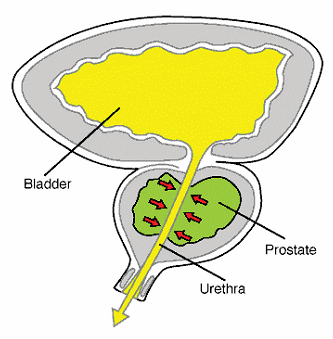
The prostate is a muscular, walnut-sized gland that surrounds part of the urethra, the tube that transports urine and sperm out of the body. A part of the male reproductive system, the prostate secretes seminal fluid, a milky substance that combines with sperm produced in the testicles to form semen. During sexual climax, muscles in the prostate propel this mixture through the urethra and out through the penis.
Anatomy and Physiology
The prostate is located directly beneath the bladder and in front of the rectum. Because the upper portion of the urethra passes through the prostate, if the gland becomes enlarged it can obstruct the passage of fluid through the urethra. While this is uncomfortable, it generally does not impair a man's ability to function sexually; however, the discomfort nd embarrassment it causes can interfere with sexual activity.
Diseases of the Prostate
Benign diseases are noncancerous. They can be uncomfortable and inconvenient but are not life-threatening, and often can be treated with drugs or surgery. The two main benign diseases of the prostate are prostatitis and Benign Prostatic Hyperplasia (BPH). The main malignant (cancerous) disease of the prostate is adenocarcinoma of the prostate, or prostate cancer.
Role of Homeopathy
In homeopathy literature various medicines are given for the treatment of prostatic enlargement but no significant work has being done to elicit their efficacy. As such there is need to explore the efficacy of homeopathic medicines otherwise indicated for various diagnostic symptoms of Benign prostatic hyperplasia in the homeopathic literature.
Central Council Of Homeopathy, India has undertaken this project in its  Lucknow, Gudiwada, Bhopal, Noida, triputh & siliguri centres .
Click HERE to download the study report.
Click on the image to view the enlarged & clear picture.


Sunday, July 06, 2008

Clinical evaluation of Homoeopathic medicines in chronic cervicitis and cervical erosion- A study report

Clinical evaluation of homoeopathic medicines in chronic cervicitis and cervical erosion

S R Sharma, Bindu Sharma , Clinical Research Unit, Shimla.

C Venkataranam, K.S.V Bharat Lakhshmi R V R Prasad, Clinical Research Unit, Tirupati.

Hari Singh, Asha Hari Singh, Praveen Oberai,Sangeeta Duggal, Savita Kattara, Regional Research Institute, New Delhi.

B. K. Singh, Ojit Singh, Clinical Research Unit, Imphal.

S D Pathak, M K Rai, Clinical Research Unit, Varanasi (U.P.).

Source : CCRH News letter 2007

Download : Full Text

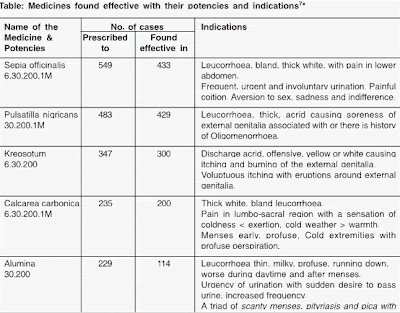
Objectives: The objectives of the study were to evolve a group of most effective homoeopathic medicines in chronic cervicitis and cervical erosion and to identify their reliable indications, useful potencies, frequency of administration and relationship with other medicines.

Methods: The study was undertaken by Central Council for Research in Homoeopathy at its Units/Institute at Shimla, Imphal, Varanasi, Tirupathi and New Delhi. Cases of Cervicitis and Cervical erosion, presenting with vaginal discharge, low backache, lower abdominal pain/discomfort or dyspaerunia confirmed by P/V & P/S examination were enrolled in the study. Cases suffering from other chronic disease(s) or under other system of treatment were excluded from the study. Homoeopathic medicines were prescribed on the basis of totality of symptoms of each case, in mother tincture (Q) or 6C, 30C, 200C & 1M potency. A total of 3213 cases were followed up for one year. Assessment of improvement was done on predefined parameters.

Results: There was varying degrees of improvement; 261 cases were cured, 1104 cases improved markedly, 982 cases moderately, 713 cases mildly and 153 cases did not improve. Medicines found effective were: Alumina(n=114), Borax(n=67), Calcarea carbonicum(n=200), Caulophyllum(n=170), Hydrastis(n=110), Kreosotum(n=300), Lachesis(n=160), Mercurius solubilis (n=74), Natrum muriaticum(n=97), Pulsatilla(n=429) and Sepia(n=433). A few of the cases, who required repeated cauterization in the past, got cured permanently and required no cauterization after homoeopathic treatment.

Conclusion: Sepia alone emerged as the most frequently indicated medicine for Cervicitis and Cervical erosion. The objective to identify indications of homoeopathic medicines was achieved. But, other objectives, such as relationship between different medicines, could not be achieved.

Saturday, July 05, 2008

Encyclopedia of Homeopathy by Andrew Lockie

Homeopathy is far more than just a different set of “pills” for everyday ills. It provides a language  for  diagnosis  and  a  range  of  approaches  to  health.  This  book  provides  the information necessary to use homeopathy to treat many every day illnesses by focusing on the cause and the presenting symptoms. Central to this  is an understanding of the homeopathic remedies themselves.  The clear descriptions and illustrations in this book make the exploration of homeopathy and its medicines a delight and bring accurate use of homeopathy for minor ailments into the home. In addition, more serious conditions are described, and the way homeopathy can play a part in the holistic management of these conditions is explored.

Dr. Andrew Lockie was a homeopathic physician and a member of the Royal College of General Practitioners and the Faculty of Homeopathy when he wrote the first edition of Encyclopedia of Homeopathy. In this book, Andrew Lockie has provided an excellent and straightforward  introduction  and overview of  this broad  subject. We,  like Dr. Lockie, believe  that many more  people  can  access  both  the  benefits  of   homeopathy  and  the wonders of the remedies through this book.

Click HERE to download the book in pdf format .